
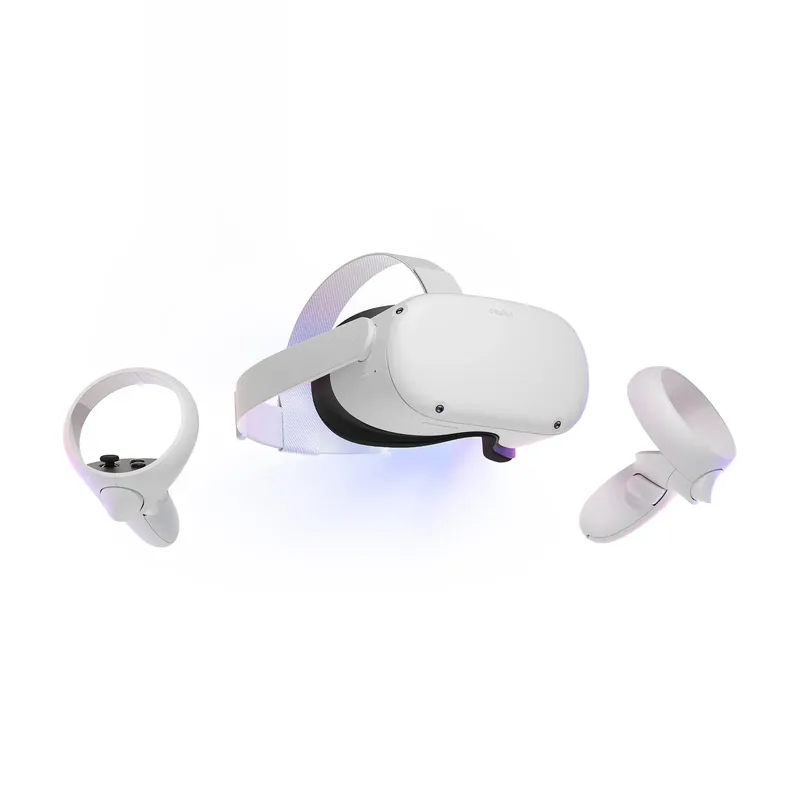
Meta Quest 2
by Meta
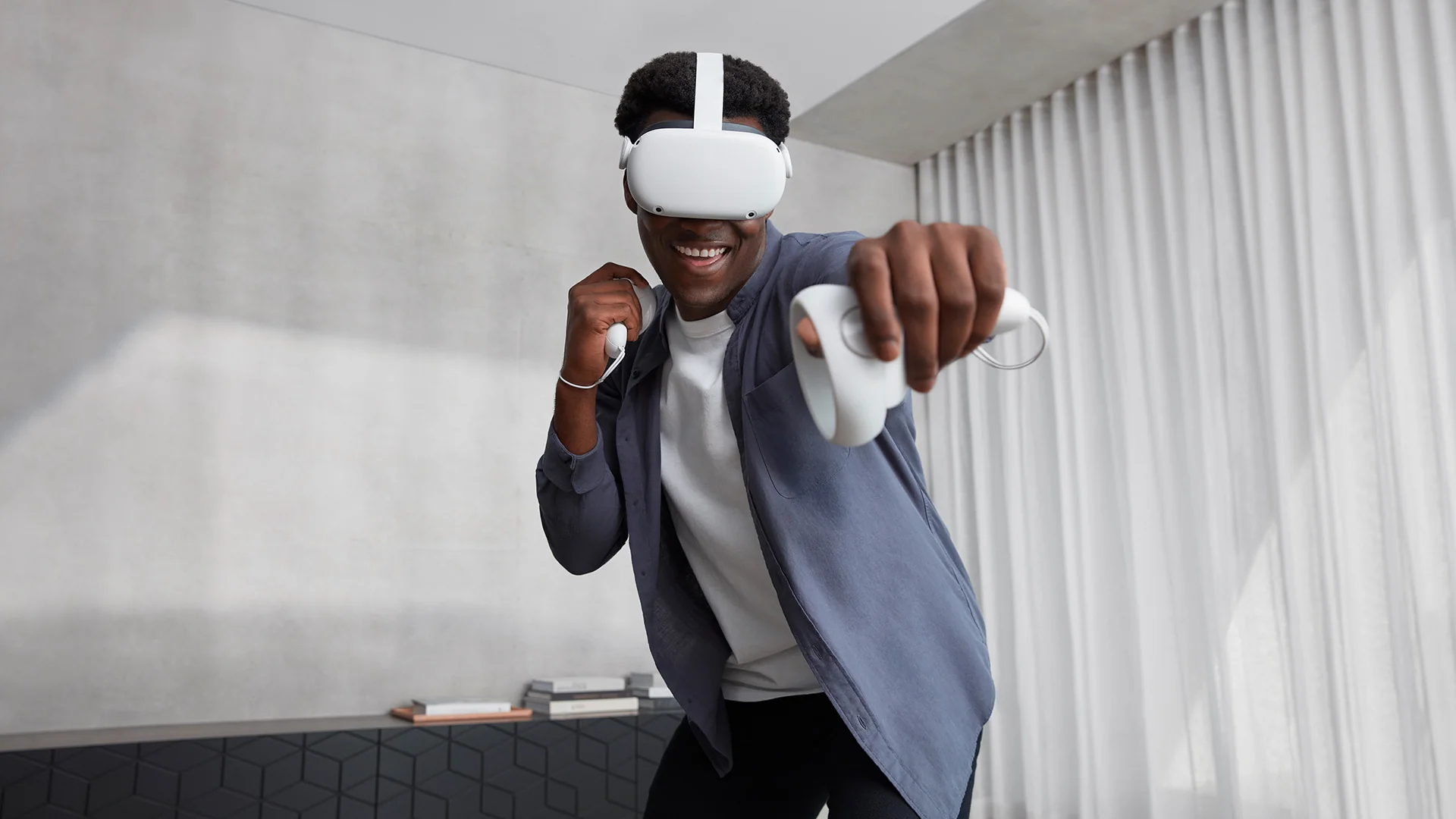
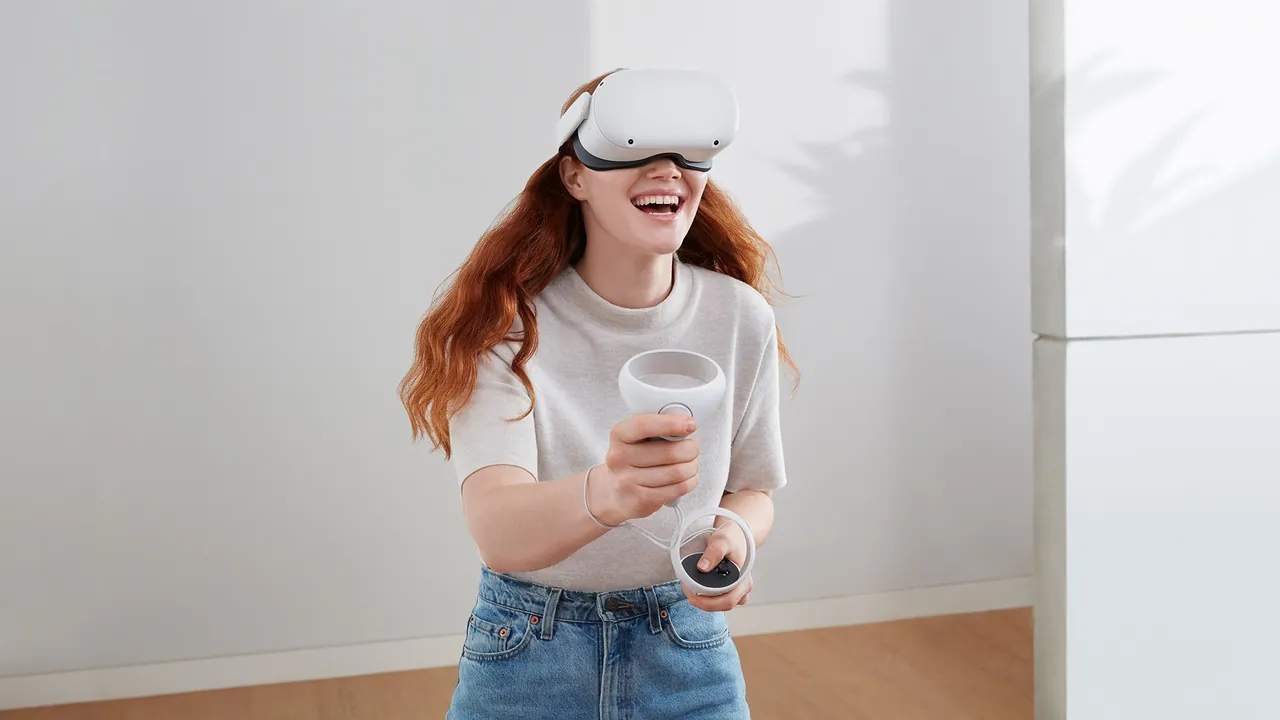
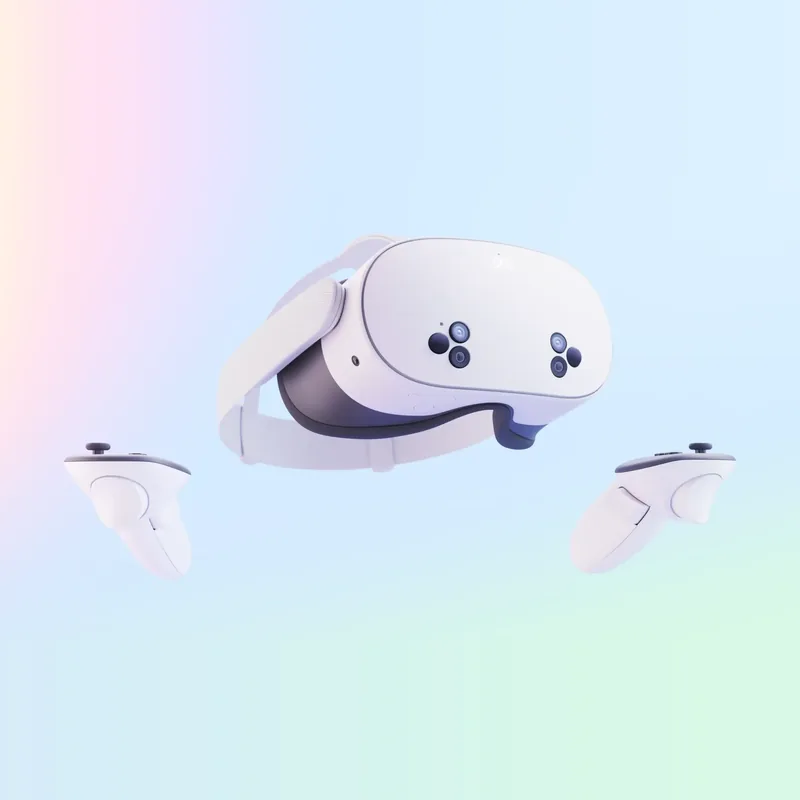
Meta's 2020 standalone headset, launched as Oculus Quest 2, that brought wireless VR to a mass audience. It is discontinued and replaced by Quest 3 and Quest 3S.
- Per eye
- 1832 × 1920
- Max refresh
- 120 Hz
- Weight
- 503 g
- RAM
- 6 GB
Overview
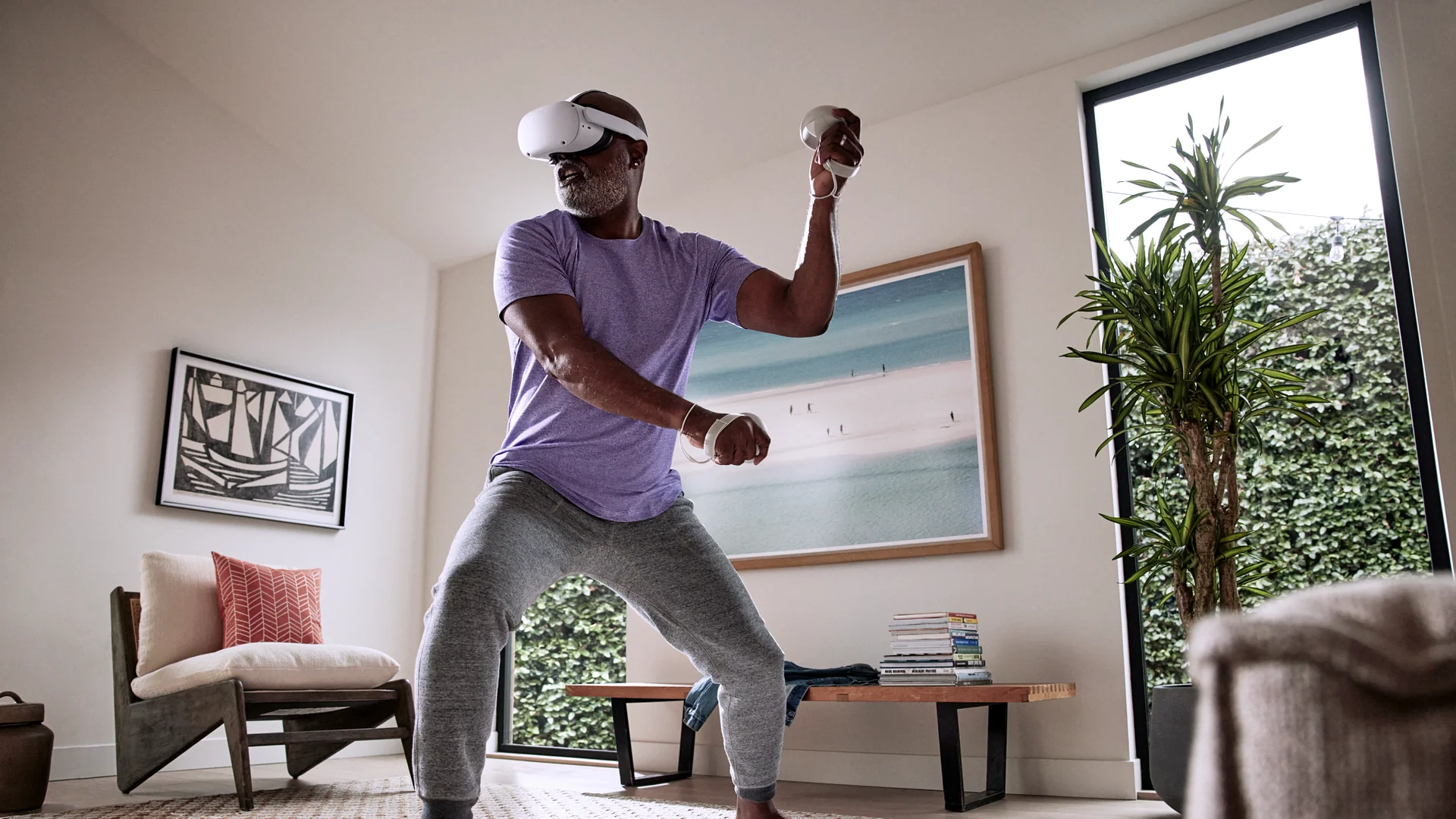
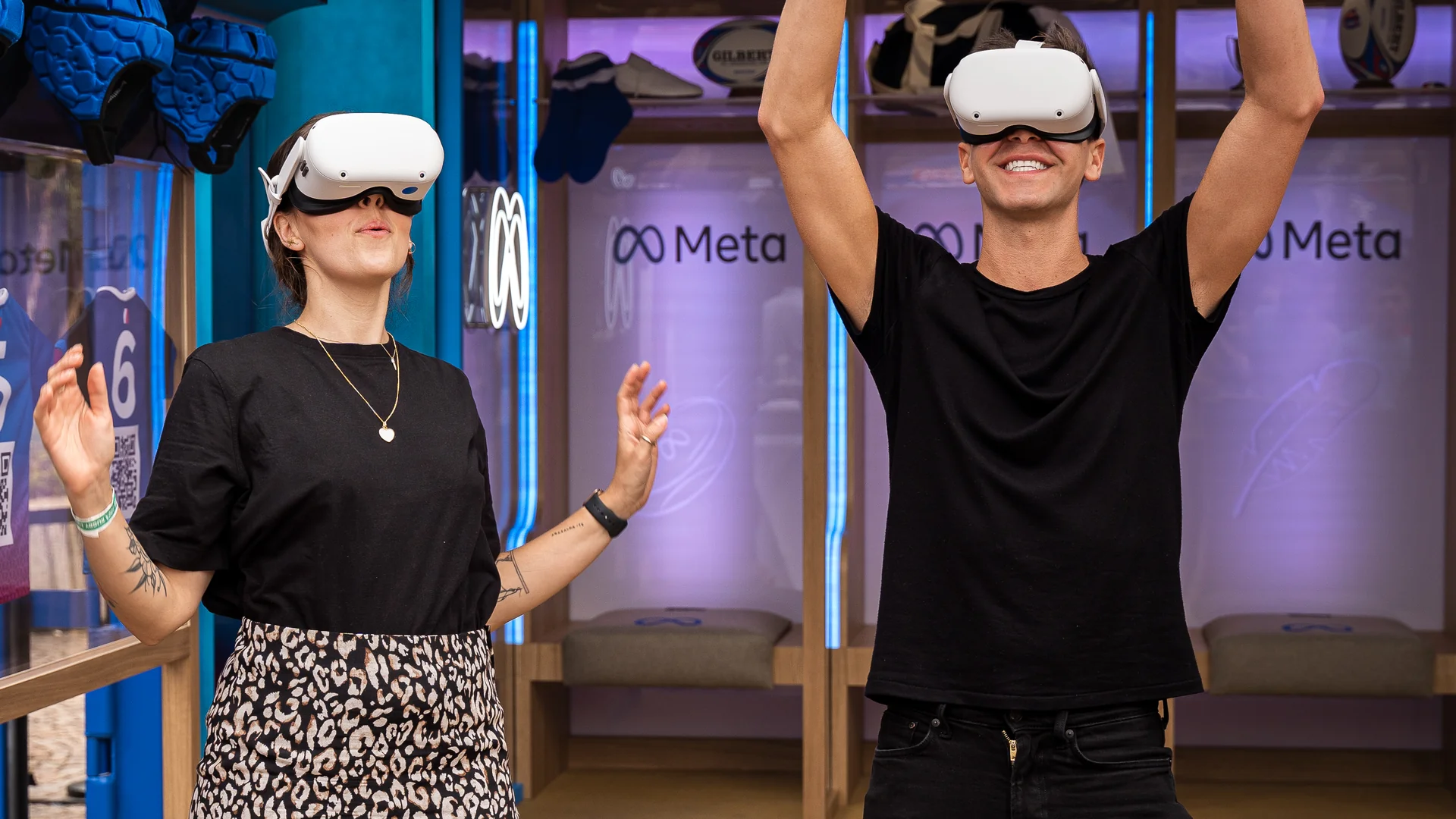
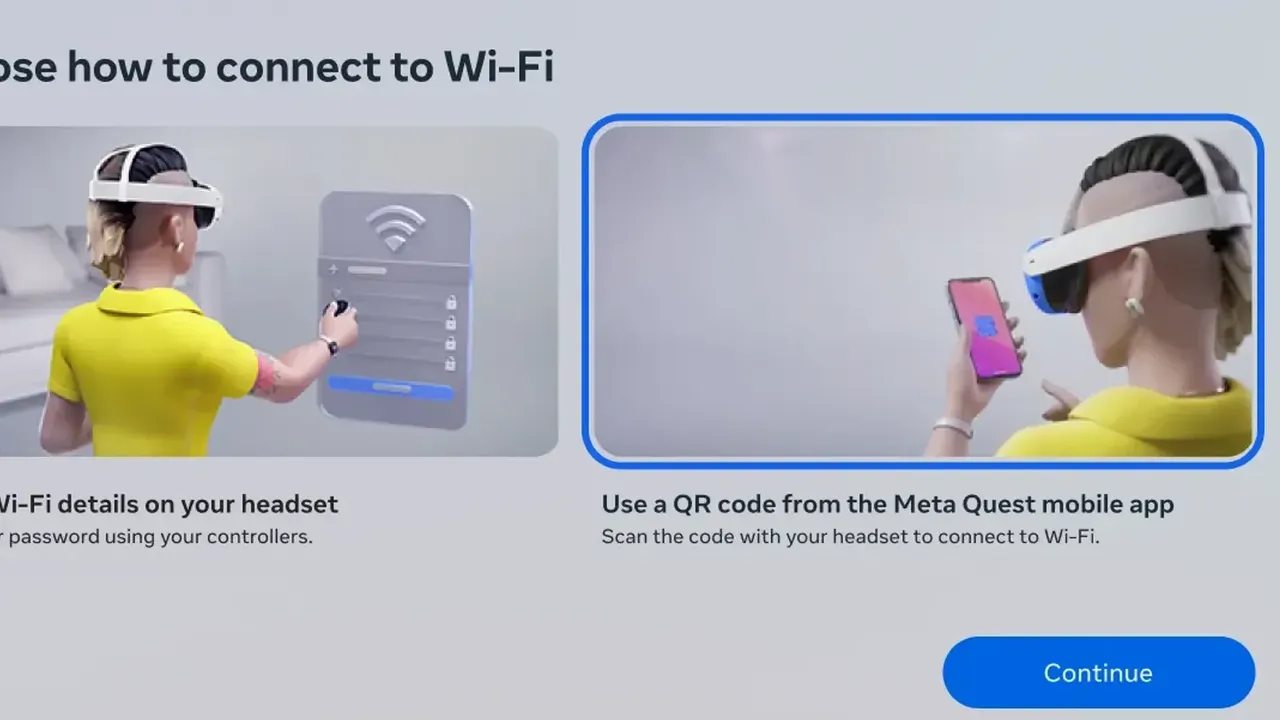
Meta Quest 2 launched on October 13, 2020 as the Oculus Quest 2, at $299 for the 64 GB model. A 128 GB model later replaced the 64 GB version, and 256 GB was also offered. It became the best-selling VR headset of its generation and made standalone VR common: you set it up with a phone, and it plays games with no PC or cables. Meta has since stopped selling it. Its successors are the Meta Quest 3 and the lower-cost Meta Quest 3S.
Display and optics
Quest 2 uses a single fast-switch LCD panel that shows 1832 × 1920 pixels per eye. It runs at 72 Hz and 90 Hz, and Meta later added 120 Hz support. Fresnel lenses keep the cost down, but the sharp area is smaller than with modern pancake lenses, and glare can show in high-contrast scenes. Lens spacing has three fixed positions: 58, 63 and 68 mm.
Comfort and design
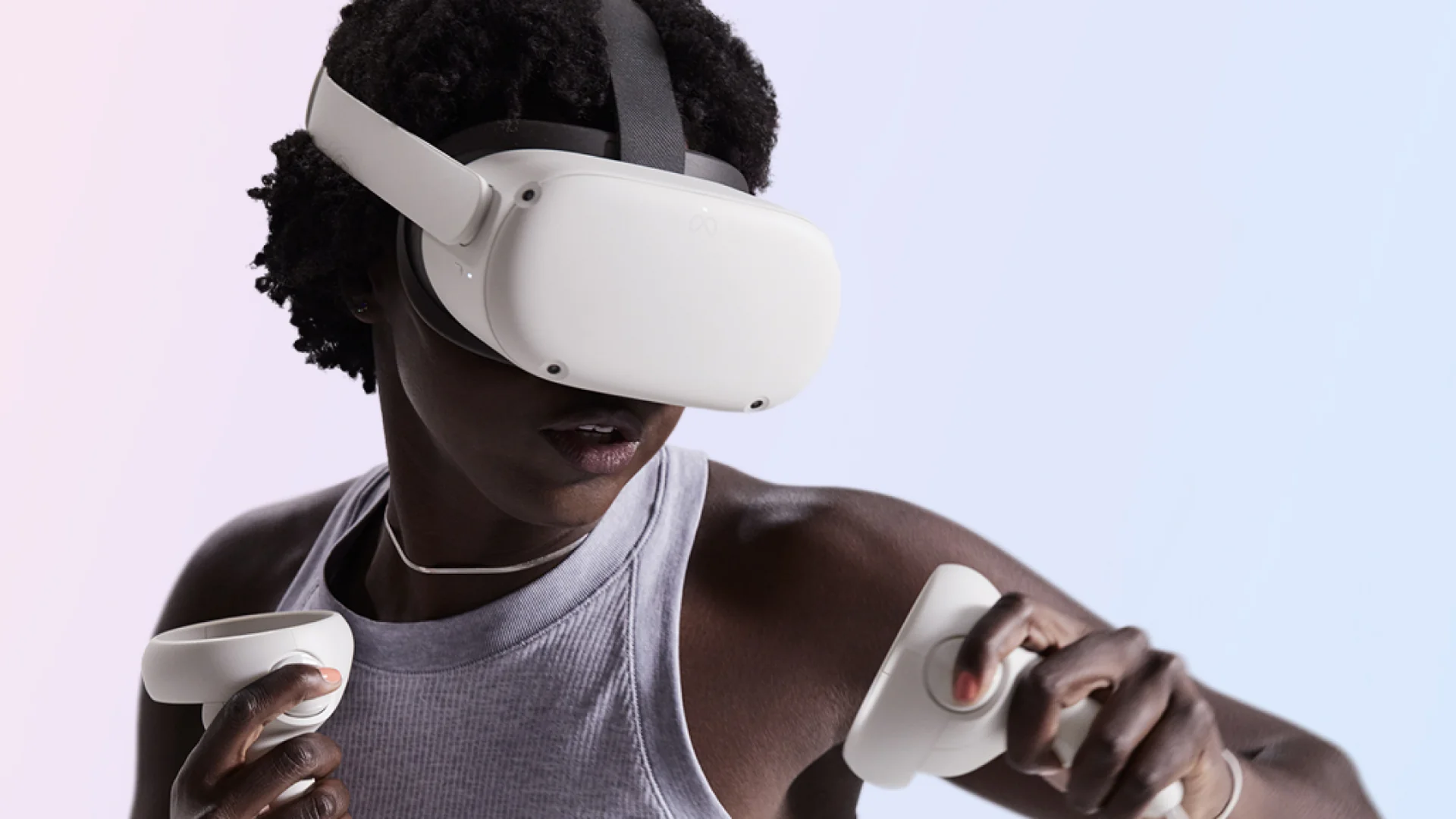
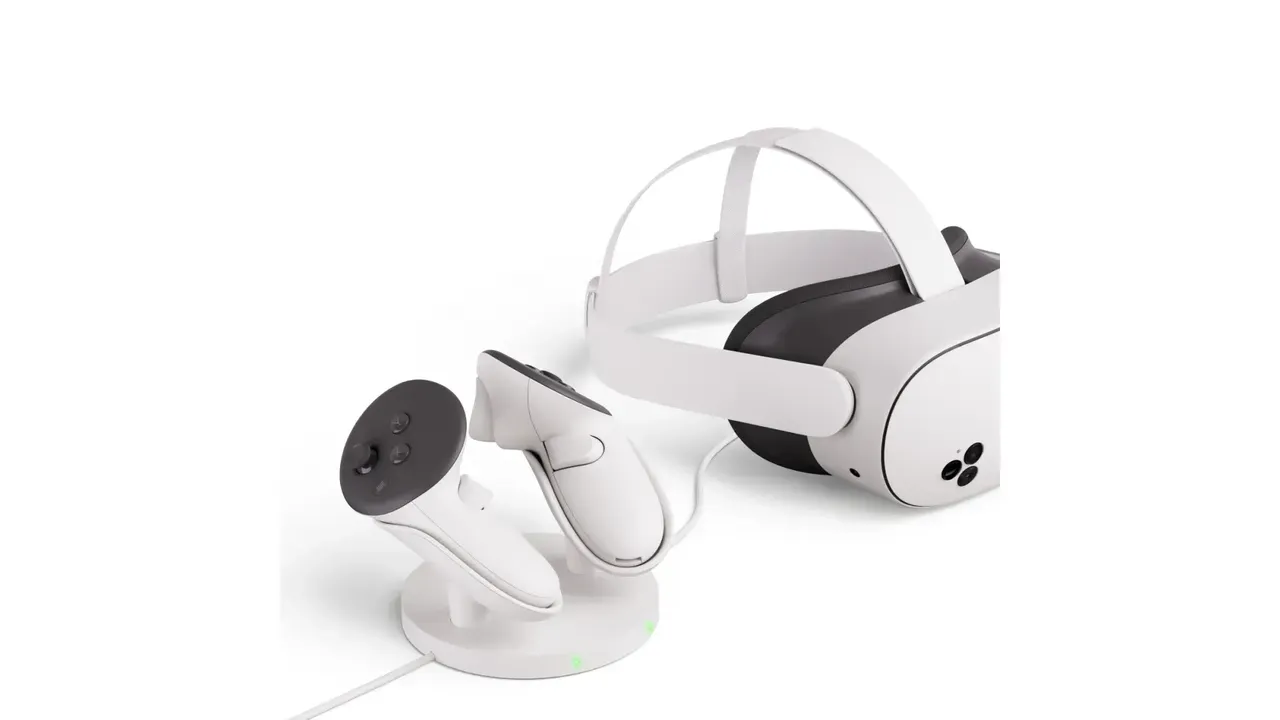
The headset weighs about 503 g with its basic fabric strap. Battery life is roughly two hours. Many owners swapped the stock strap for a rigid or battery strap to balance the weight. Inside is a Snapdragon XR2 with 6 GB of RAM.
Tracking and controllers
Four cameras on the headset provide inside-out tracking for the headset and controllers, so there are no base stations to set up. The same cameras give a black-and-white passthrough view, and hand tracking lets you use some apps without controllers. The Touch controllers have tracking rings and run on AA batteries.
Software and apps
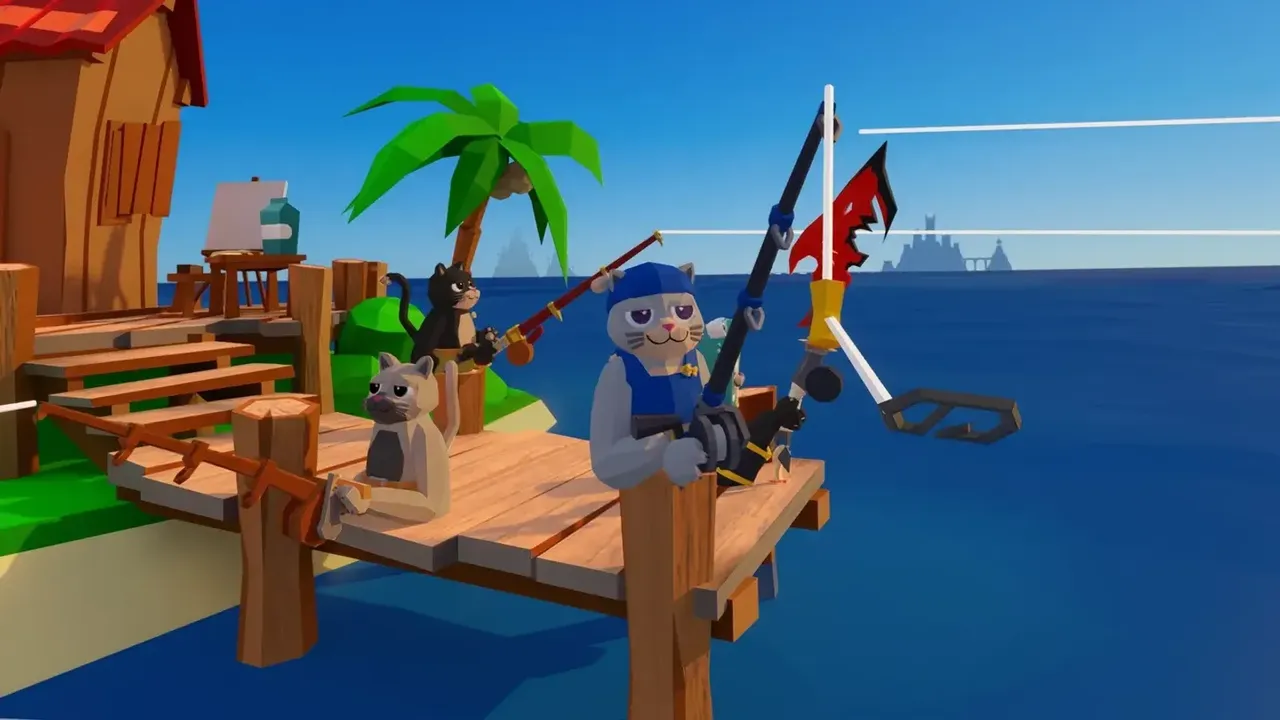
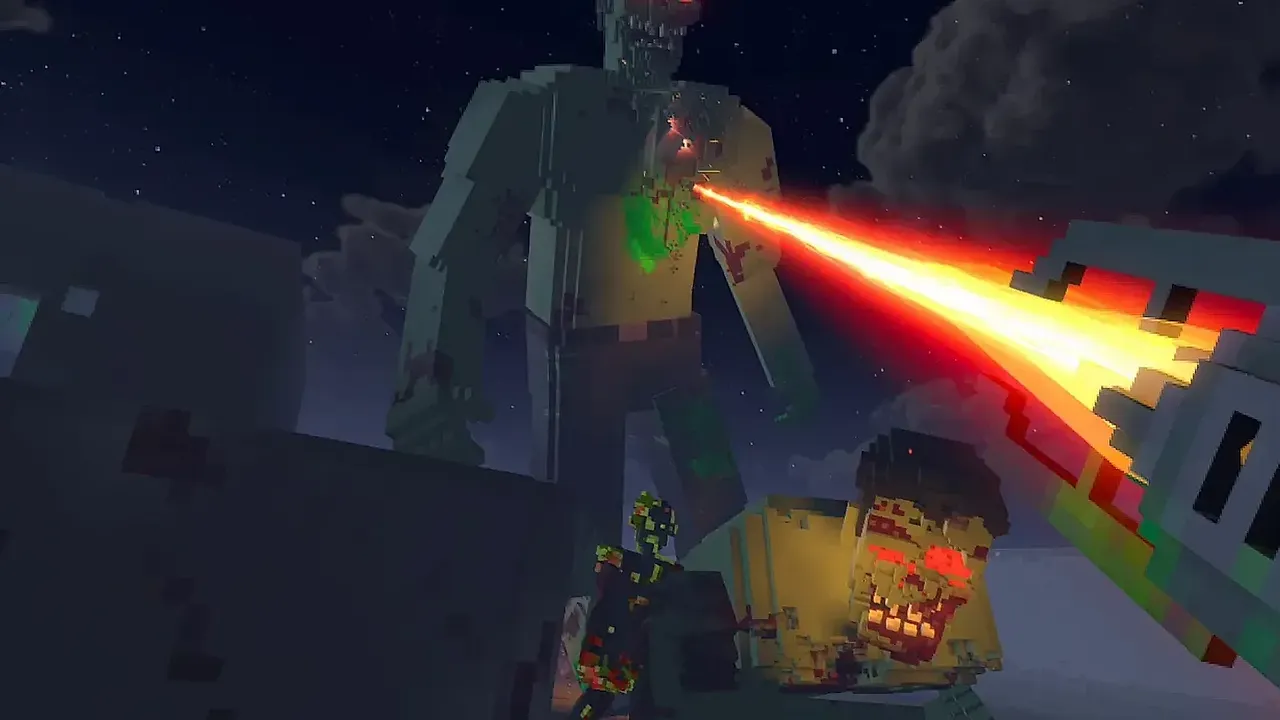
Quest 2 installs apps from the Meta Horizon Store. Its browser supports WebXR. For PC VR, Quest Link works over a USB cable and Air Link works over Wi-Fi, which opens up SteamVR games on a gaming PC. Newer apps increasingly target Quest 3-class hardware, so some recent releases run with reduced settings, or not at all, on Quest 2.
Who it is for
Quest 2 still makes sense for current owners and for buyers of used units who want a cheap first look at VR. New buyers get a sharper image, color passthrough and a faster chip with Quest 3S or Quest 3.
Specifications
Display & optics
- Panel
- LCD
- Lenses
- Fresnel
- Per eye
- 1832 × 1920
- Max refresh
- 120 Hz
- Refresh rates
- 72 Hz90 Hz120 Hz
- IPD range
- 58 / 63 / 68 mm (3 steps)
Hardware
- Chipset
- Snapdragon XR2
- RAM
- 6 GB
- Storage
- 64 GB128 GB256 GB
- Weight
- 503 g
- Battery
- 2 h
Tracking & input
- Tracking
- Inside-out
- Hand tracking
- Yes
- Eye tracking
- No
- Face tracking
- No
- Passthrough
- Monochrome
- Controllers
- Touch (2nd gen)
- PC VR
- Wired and wireless
Release & price
- Status
- Discontinued
- Released
- October 13, 2020
- Launch price
- $299