
Fabula Rasa launches on Quest on December 3 with AI-powered townsfolk
Fabula Rasa reaches Meta Quest 3 and 3S on December 3. ARVORE’s VR game asks players to persuade nine AI-powered townsfolk before facing a monster pit.
By vrBlogs
· 3 min read · Source: VR.org News
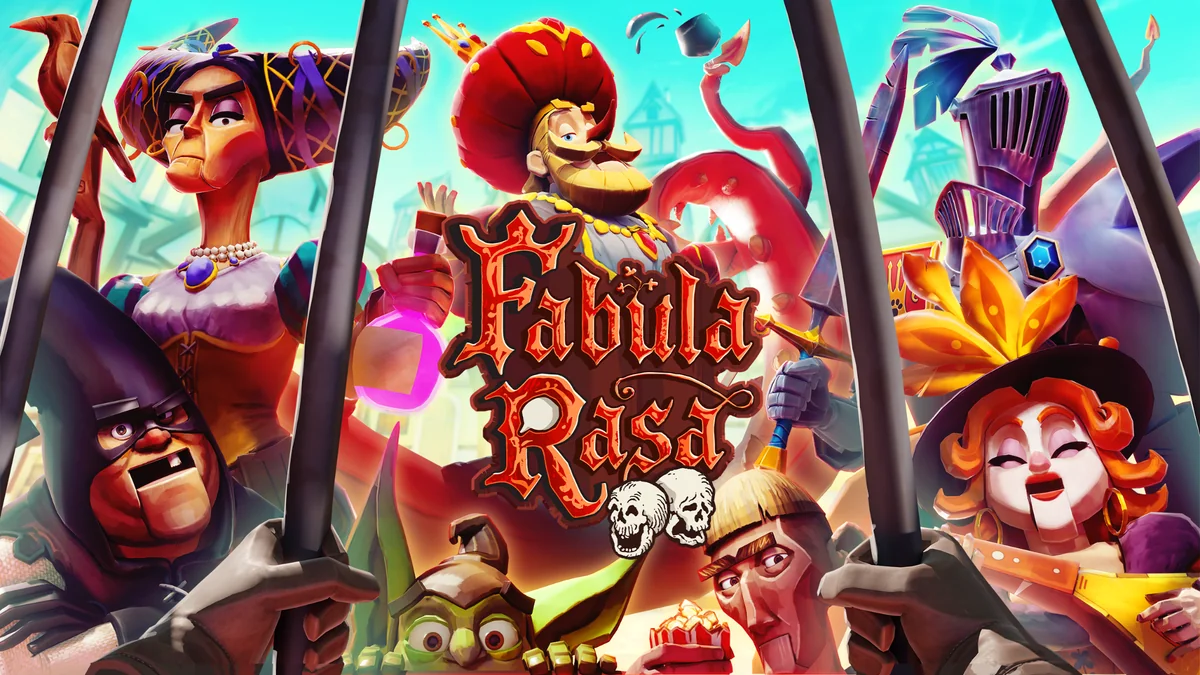
Fabula Rasa is ARVORE’s improv-driven VR game, launching on Meta Quest 3 and Meta Quest 3S on December 3, 2026. Players speak with nine AI-powered townsfolk and try to persuade enough of them to avoid being sent into a monster pit.
The release follows an earlier November 12 date from ARVORE’s October announcement. That announcement has since been edited. The game was previously shown at festivals, including the 2026 SXSW Film & TV Festival, where it won the XR Experience Audience Award, and Miami Filmgate Interactive, where it received the Best of Tech award.
A trial built around conversation
The game begins with the player in a cage in a medieval market square. A scribe asks for the player’s name, trade and alleged crime. Answers are spoken aloud in the player’s own words, rather than selected from a fixed list.
Nine townsfolk then approach the cage. The player has until the King arrives to win enough of them over. Failure leads to the monster pit. ARVORE describes the experience as a handcrafted fantasy world where conversations shape an unpredictable story, and says no two playthroughs are the same.
Players can choose their approach. Luiza Justus, Game Director on Fabula Rasa, said being charming, ridiculous or an absolute menace are all valid strategies. ARVORE developed the experience through workshops with improv comedians. Ricardo Justus, the studio’s founder, described it as an improv theatre experience at its core.
How AI drives the townsfolk
The nine characters are not presented as fully scripted dialogue trees. Each is built from contextual prompts defining identity, personality and knowledge. Large language models generate their dialogue and reactions, while the writers define the people behind those responses rather than every line they say.
A heise report on an earlier Quest demo described a technology stack using Anthropic’s Claude for character personality, dialogue and reactions. ElevenLabs converts generated text into speech. ChatGPT acts as an AI director, tracking the plot and the town’s state before supplying characters with relevant information. Convai connects conversational characters to the game engine and its mechanics.
That stack was observed in festival builds from spring. ARVORE has not confirmed whether the December 3 version uses the same models. The characters can pick up objects and pursue their own agendas based on their feelings toward the player, according to ARVORE. The AI director also chooses which townsfolk come to the cage based on what the player says.
The system is designed to steer unusual questions back into the fantasy setting. Marcelo Marcati, one of the game’s two directors, gave an example in an April interview: if a player mentions Donald Trump, a towns-person might ask whether he is a king from another realm. The translation from Portuguese was made by the report’s writer.
ARVORE says it did not use generative AI art. The AI is limited to dialogue and related character responses. The studio’s stated aim is an interactive performance shaped by player improvisation.
Voice input and practical details
Earlier hands-on reports noted pauses while characters generated answers. Heise called them “long pauses,” while The Hustle said characters still pause to produce a response. Claude and ChatGPT are cloud services, so spoken turns require a round trip. That delay may function as a comic beat, but slower Wi-Fi could make it longer.
The Meta Store listing described the game as English-only, single-player and playable sitting or standing with controllers. It gave the title an Everyone rating and a Comfortable comfort rating. Heise reported that an earlier festival PC build also ran in French, Portuguese and Spanish.
The listing showed no price. It was available to wishlist ahead of release. ARVORE’s announcement also says players can unlock costume options for later playthroughs.
Some store information appeared inconsistent. The listing still showed “November 2026” under Coming soon and named Quest 2 and Quest Pro, while ARVORE’s October release announcement named only Quest 3 and Quest 3S. Quest 2 owners were advised to wait for ARVORE to clarify support; the headset is scheduled to receive its last feature update by March.
Open privacy questions
The listing linked to a 12-page terms document whose only named games are Pixel Ripped 1989 and Pixel Ripped 1995. That document does not mention voice, microphones or AI. The store listing and ARVORE’s game page also did not explain where spoken words go.
Those details matter because Fabula Rasa requires players to speak aloud, including during deliberately ridiculous attempts to persuade the townsfolk. The game’s central design removes movement as an escape: the player remains in the cage, leaving conversation as the main mechanic. Whether the nine characters can respond reliably at launch remains the key question for December 3.
Enjoyed this story?
Like it to tell the editors, or save it to read later.


Comments
Sign in to join the conversation.
Sign inNo comments yet. Start the conversation.
·