
The Rifted Skies Demo Turns VR Movement Into Action
The Rifted Skies demo combines arm-driven running, parkour and sword combat in a physical VR roguelite, while leaving its long-term depth unresolved.
By Mike Johnson
· 4 min read · Source: UploadVR
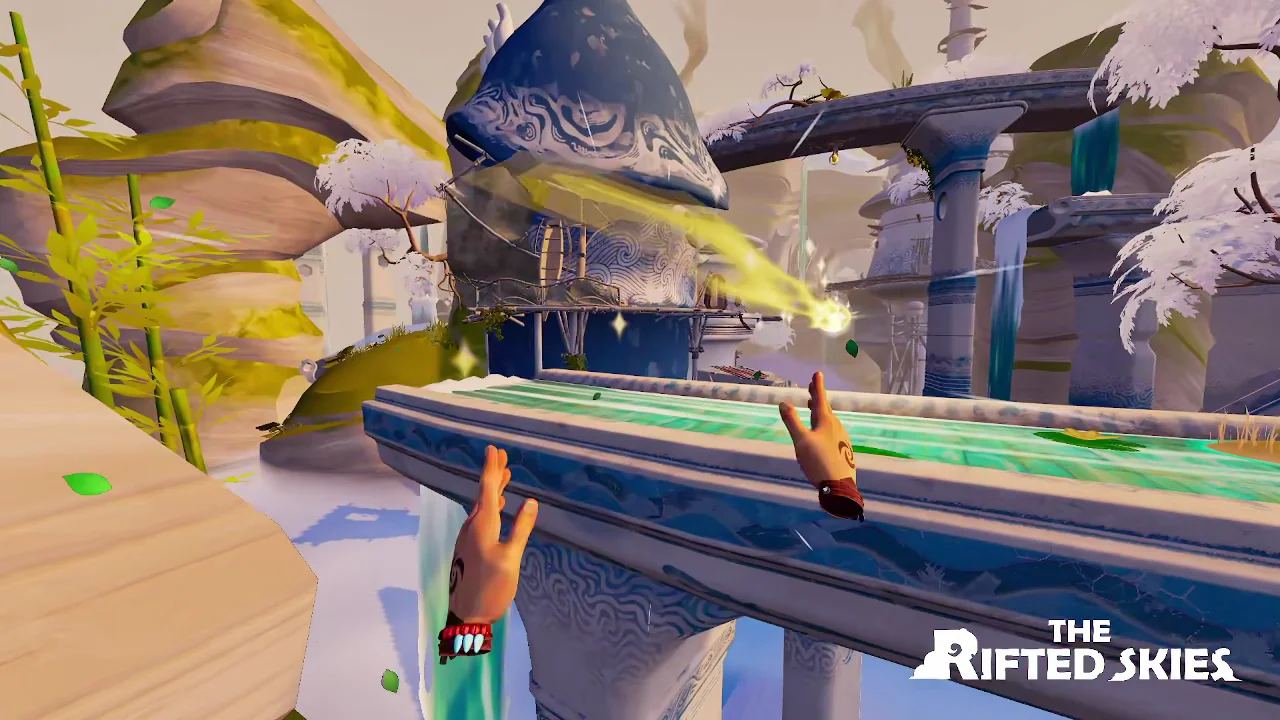
The Rifted Skies demo is an action roguelite built around arm-swinging movement, parkour and fast combat. It delivers a physical VR experience, though its deeper progression and longevity remain unanswered.
DreamVR developed The Rifted Skies as its first consumer VR project after working on location-based entertainment (LBE) venues. Its stated goal was to get players moving their arms again. The demo is available on Steam, while the full game is planned for Steam and Quest. The demo is free to play, but the full game's price and release date are still TBA.
The demo was part of Steam Next Fest. Its core movement uses arm swinging to run, arm thrusts to jump, and squats to slide under low obstacles. Controller alternatives are available: pressing A jumps, while pulling back on the right analog stick performs a squat. Snap and smooth turning options are also included.
That physical design makes The Rifted Skies stand out among increasingly stationary, controller-focused VR games. During play in a space measuring barely five meters by five meters, the movement created an immediate desire for more room or a VR treadmill. It recalls older roomscale-focused VR titles while adapting arm-based locomotion for a single-player action game.
Similar movement systems helped make Gorilla Tag a VR subgenre in its own right. More narrative-focused games such as No More Rainbows and Outta Hand also used that approach to separate themselves from crowded single-player VR adventures. The physical combat in Batman: Arkham Shadow offered another example of how demanding more movement can strengthen a VR game.
Arm-swinging movement drives every encounter
The story begins with Derwish, a young man who meets a yellow wisp. The wisp speaks of his uncertain lineage and warns that he must outrun the titular rift as it swallows his world. The setup is brief, sending the player into motion almost immediately.
The arm-swinging controls feel more fluid than similar systems in games such as Joyway's Stride. The recognition window is also broad. That helps the game respond reliably during active play, but it can trigger movement unintentionally. Raising an arm to adjust headset volume caused running to activate, even without a quick swing. Pausing before reaching for a drink or adjusting the headset is advisable.
The same physical emphasis applies to jumping and sliding. Squat detection is generous, and it was preferable to the controller-mapped option despite the availability of both. Those with bad knees can avoid the physical versions, although the game's intended style remains body-driven.
The Rifted Skies footage was captured by UploadVR.
Simple sword combat keeps the pace moving
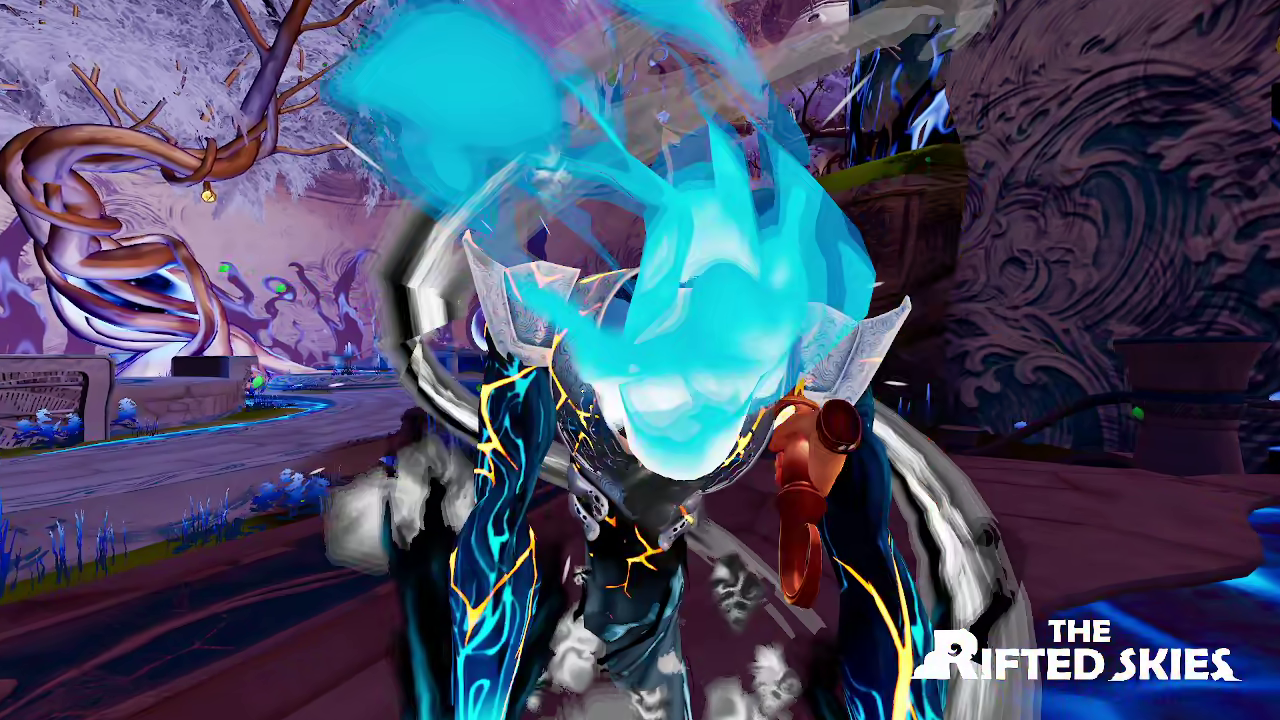
The first weapon is a sword. It supports ordinary hack-and-slash attacks, can deflect projectiles back at enemies, and can be charged before being thrown at ghostly creatures that appear through portals.
Combat stays simple because the player is constantly moving away from the Rift. Enemies need to be defeated quickly rather than approached as complex, stationary encounters. One effective pattern was throwing the blade at an enemy charging a projectile to stun it, then sprinting over and finishing the fight with slashes.
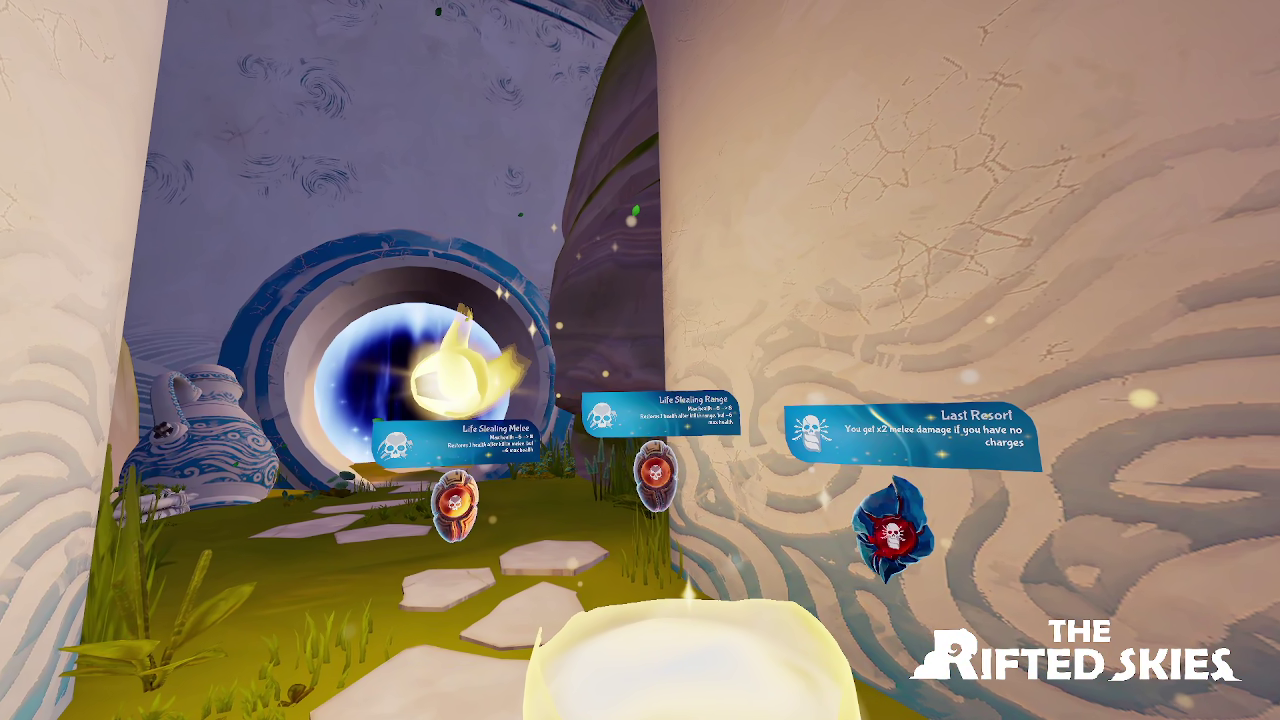
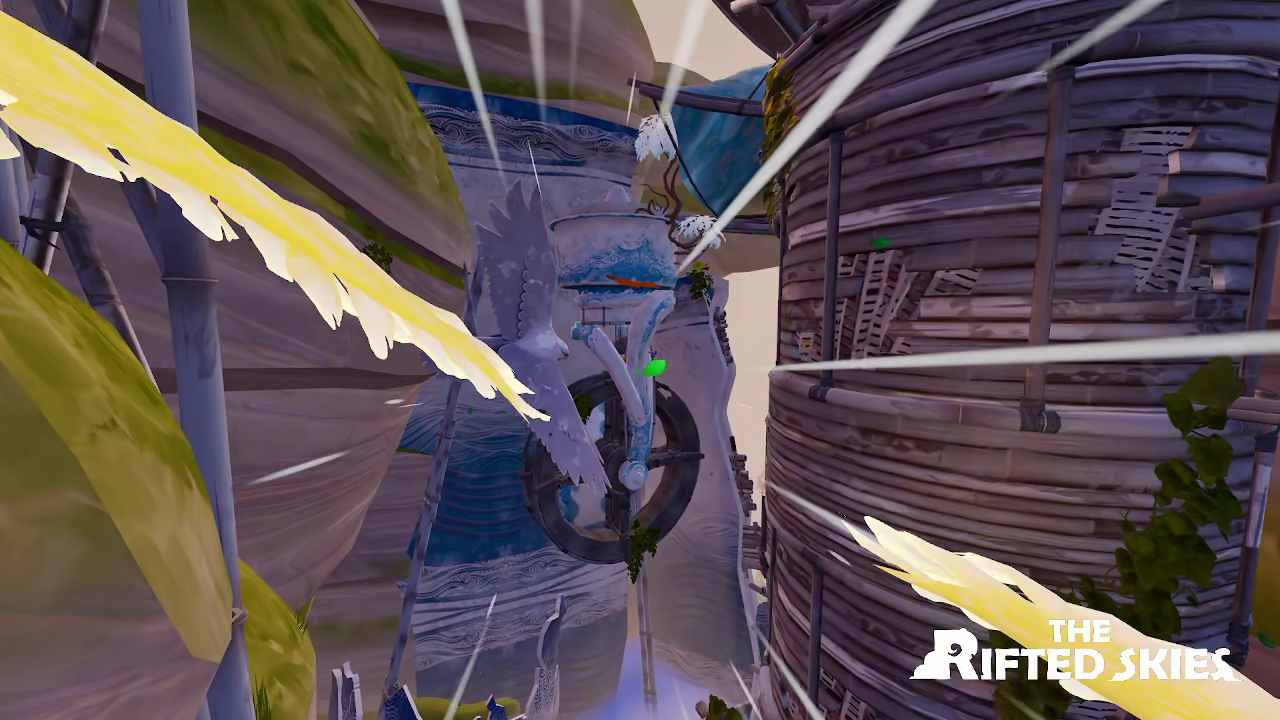
The strongest moments come when movement and combat merge into one flow. Sprinting, jumping, gliding on air currents and cutting enemies can feel like one continuous action. Generous checkpoints also make it difficult to stop, even after going down. Progress pauses at the end of an area, where standard roguelite power-ups become available.
That loop remained compelling beyond the point where arm fatigue began. The demo presents its central gameplay clearly and gives DreamVR's physical design a convincing foundation.
Bright environments raise questions about variety
The world is bright and colorful, but repeated landscape sections appeared during only a couple of runs. The environments also lack standout visual fidelity and seem optimized for standalone headsets. That limitation matters less during constant movement, since there is little time to stop and inspect scenery.
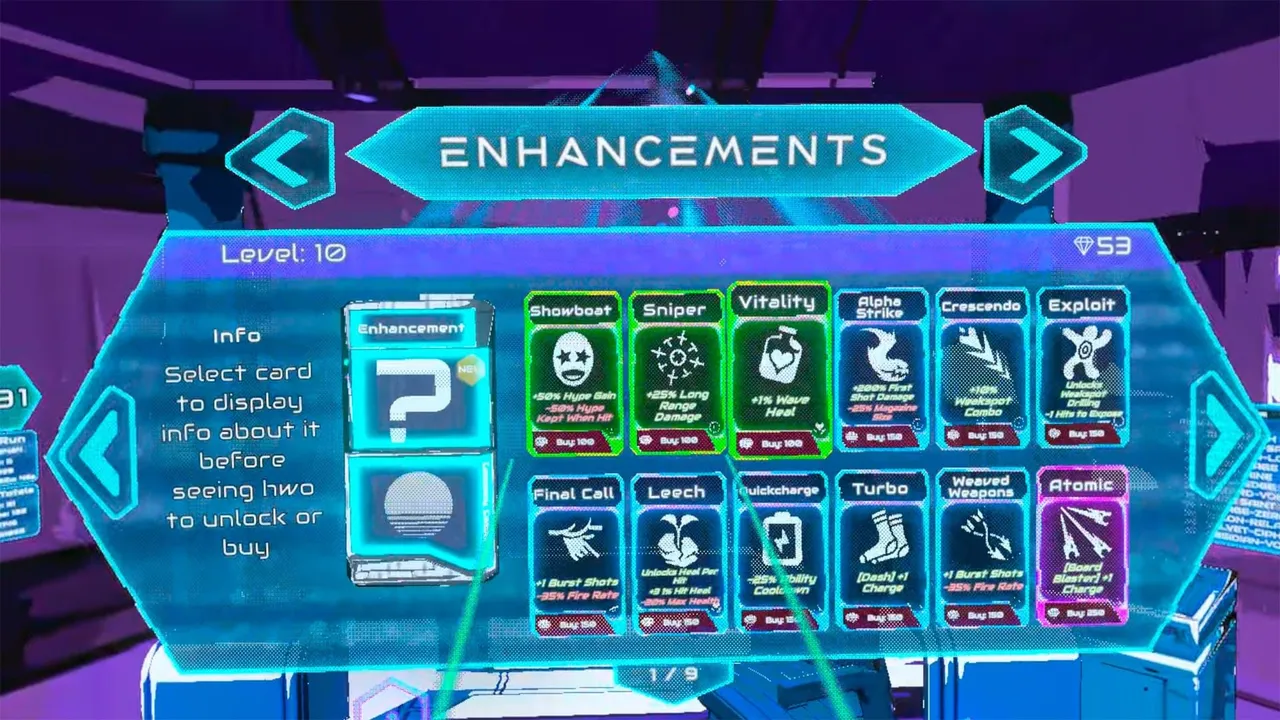
The demo leaves open whether the full game will introduce enough biomes and environmental variety to maintain interest. The planned release includes three biomes, six unique enemies, three bosses and more than 100 upgrades, according to the game's full-game Steam listing. The demo itself includes the first biome, one enemy and gliding as its first meta-progression ability.
Comfort options do not remove the intensity
The game combines stick-based movement with arm swinging and gesture-based actions such as jumping and sliding. Snap turning and smooth turning are both available, with toggles for controller-based jumps and slides.
Continuous movement can still be intense, even when physical gestures match the player's real actions. A warning at startup acknowledges that potential issue. Players who are sensitive to sustained motion should treat the demo's pace and physical demands as important considerations.
The PC test used a Ryzen 7 9850X3D processor, 32 GB of DDR5 RAM and an RTX 5070 Ti GPU. It was played on a Meta Quest 3 through the Virtual Desktop app using the Godlike graphics preset.
Demo proves the loop, not the full game's staying power
The central gameplay has no major complaint in this demo. The unresolved issue is what type of roguelite The Rifted Skies will become beyond its opening action. Some games hint at deeper lore before leaving narrative aside, while others, such as Underdogs, combine a complete story with enough replayability to support repeated runs.
Without leaderboards, collectibles or persistent rewards, the long-term structure is difficult to judge. A demo cannot answer that question. For now, The Rifted Skies is worth wishlisting and monitoring as DreamVR reveals more about the full release.
Enjoyed this story?
Like it to tell the editors, or save it to read later.

Comments
Sign in to join the conversation.
Sign inNo comments yet. Start the conversation.
·