Apple Vision Pro review: the best screens in a headset, at a price few can justify
An AI-written assessment of Apple Vision Pro from official specs and published reviews: superb micro-OLED displays, best-in-class eye and hand control, strong multitasking and immersive video; a heavy, front-loaded fit, tethered battery, few games and a $3,499 price.
निष्कर्ष
The original Apple Vision Pro has the sharpest displays and the most natural eye-and-hand interface reviewers had used, and it makes an excellent private cinema and Mac monitor. Weight, a tethered battery, a thin game library and the $3,499 price hold it back, and the M5 model now offers more for the same money.
स्कोर का विवरण
खूबियाँ
- Outstanding micro-OLED displays
- Precise eye and hand tracking interface
- Strong multitasking in visionOS
- Smooth performance with no visible frame drops
- Excellent immersive video and passthrough
कमज़ोर पक्ष
- Heavy and front-heavy on the face
- Tethered battery rated for about 2 hours
- Few games and no controllers
- Narrower field of view than Quest 3
- Very high price
- Replaced by the M5 model at the same price
फ़ोटो
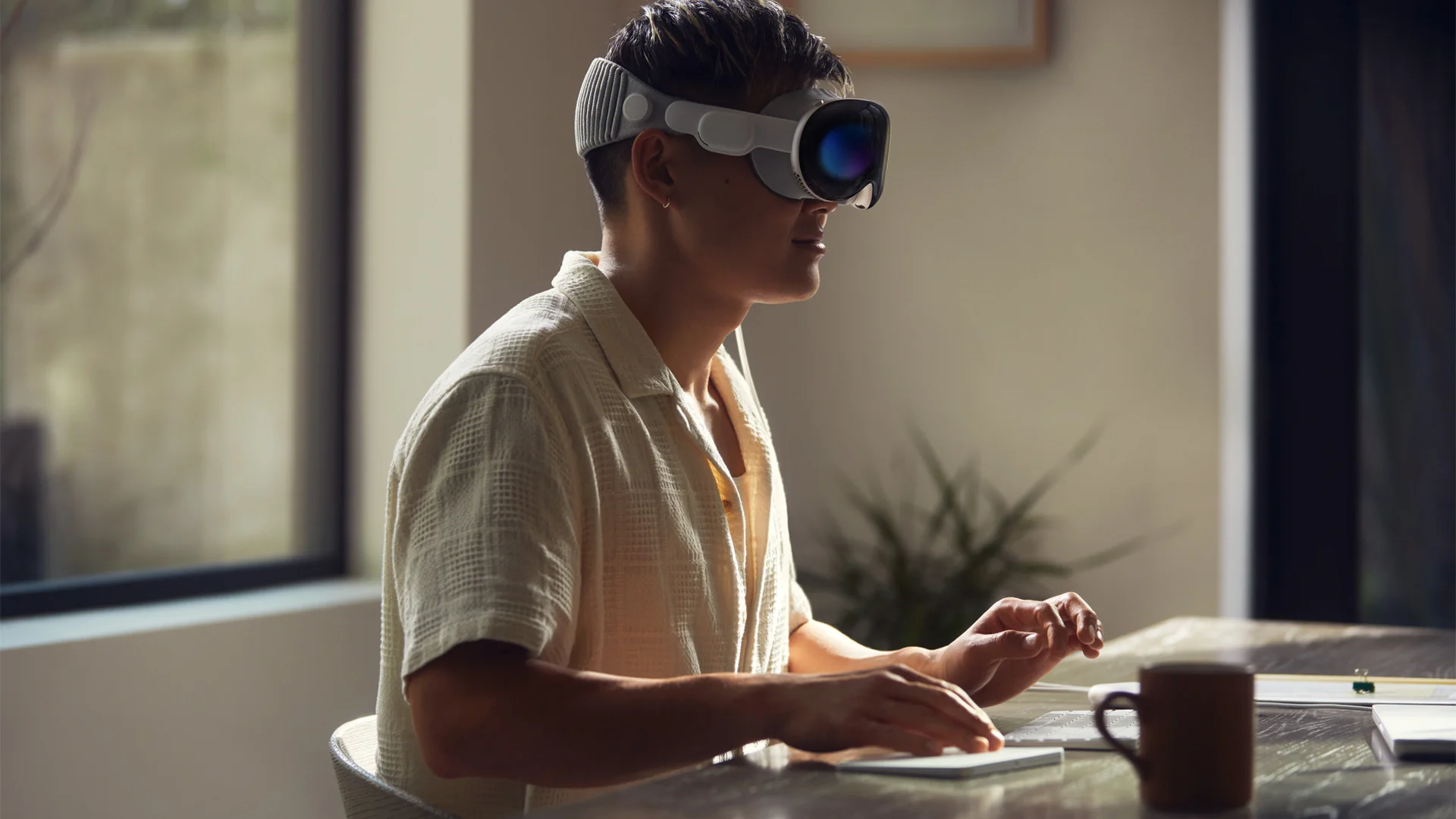
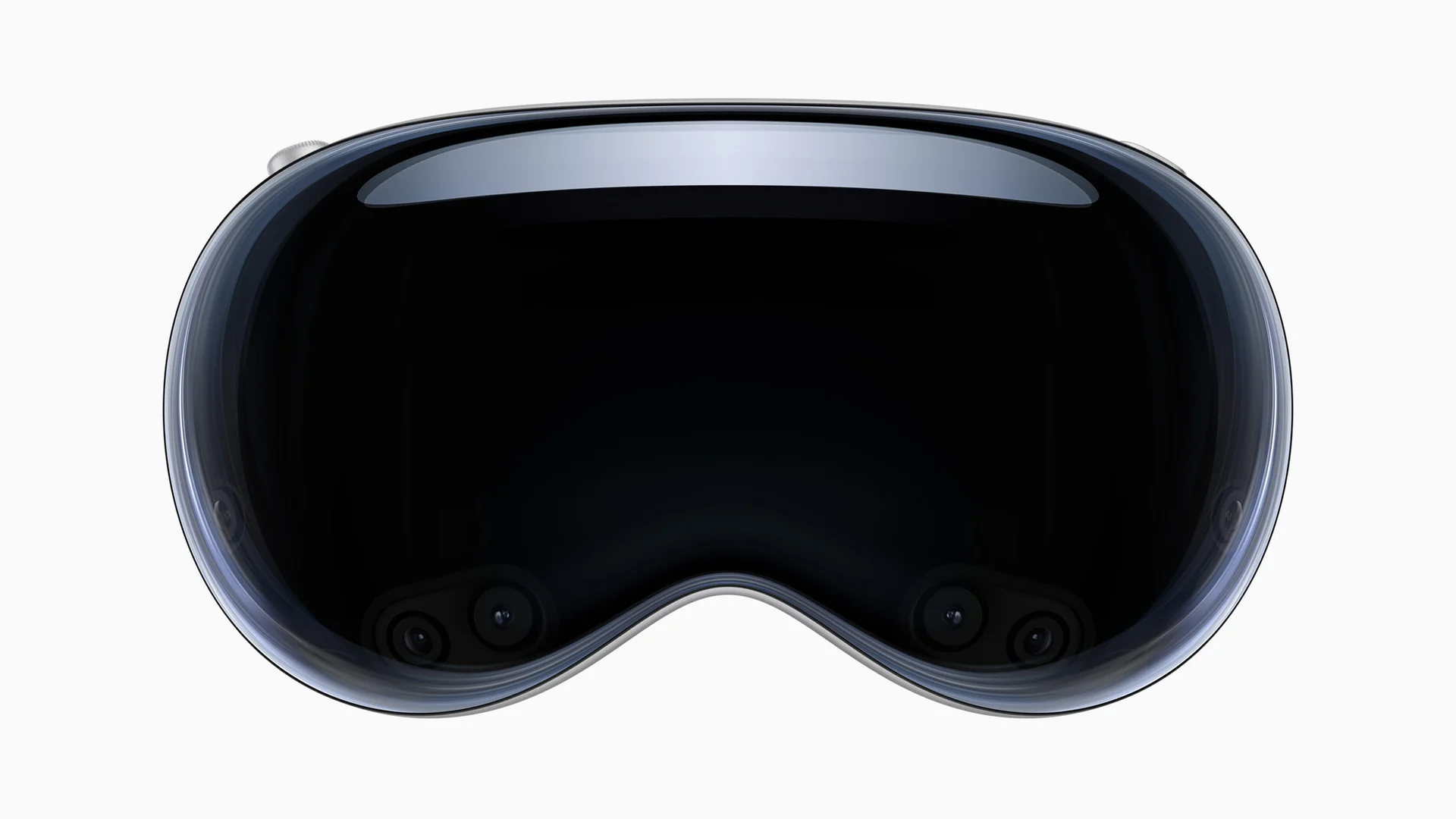
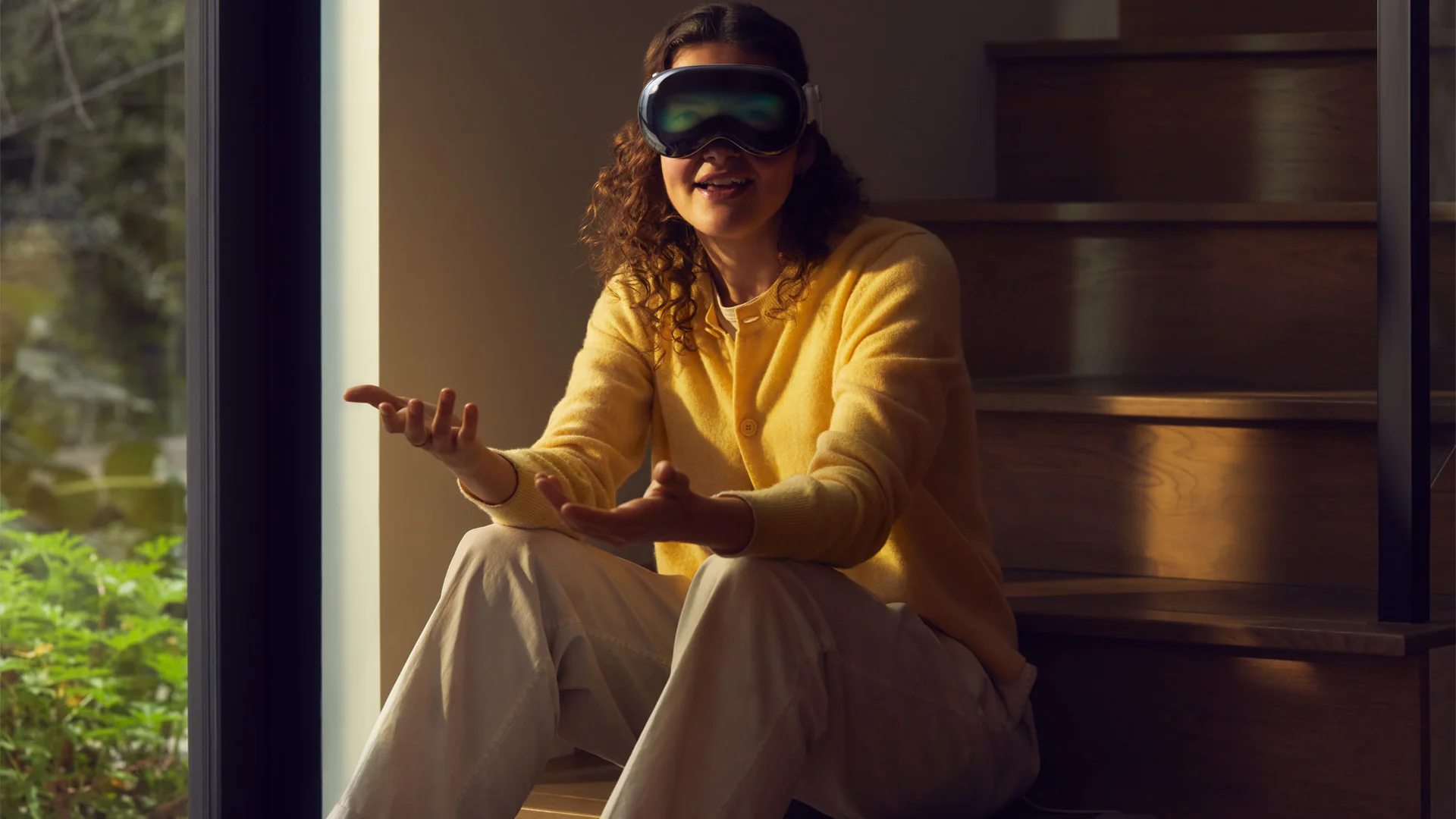
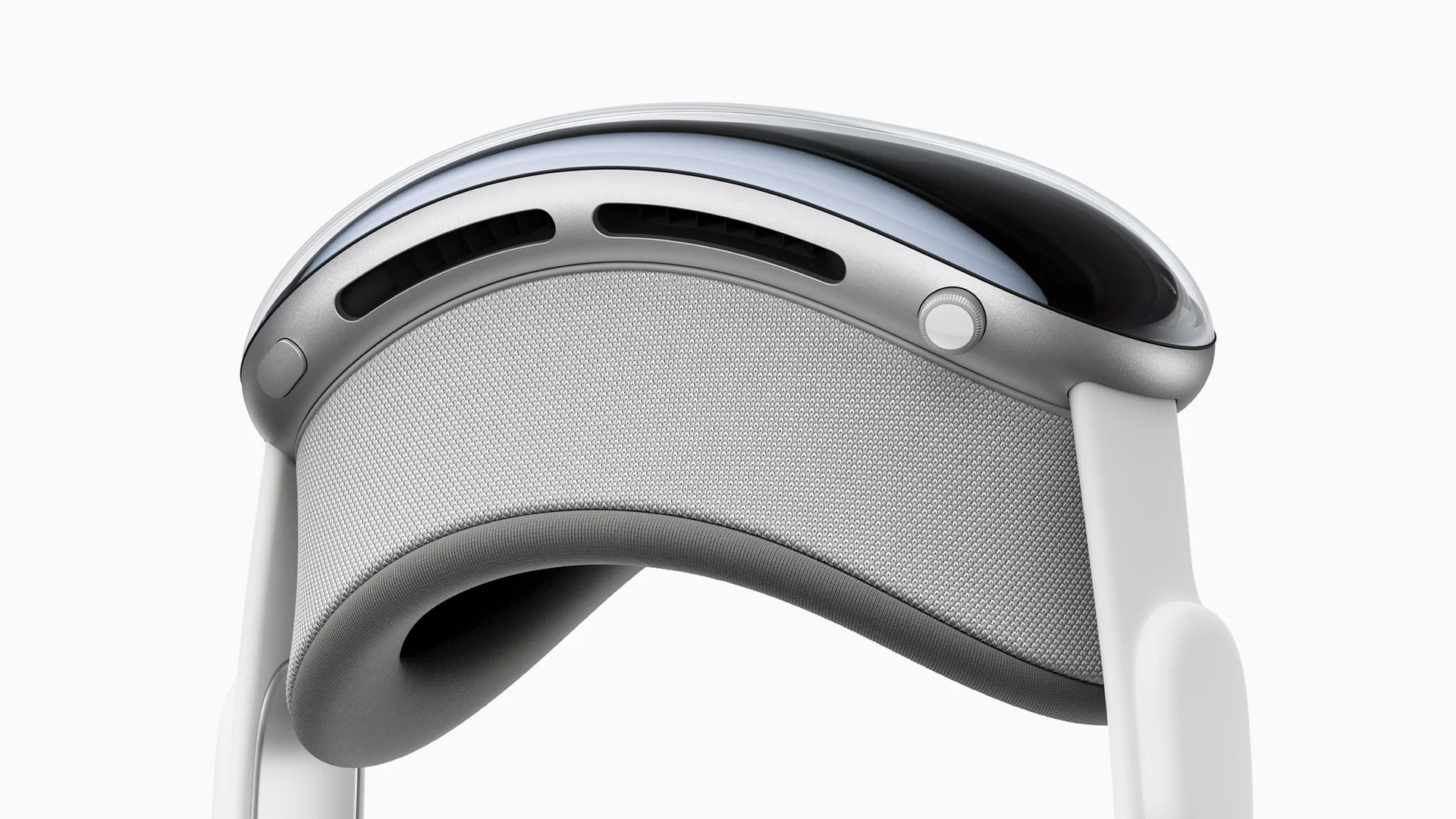
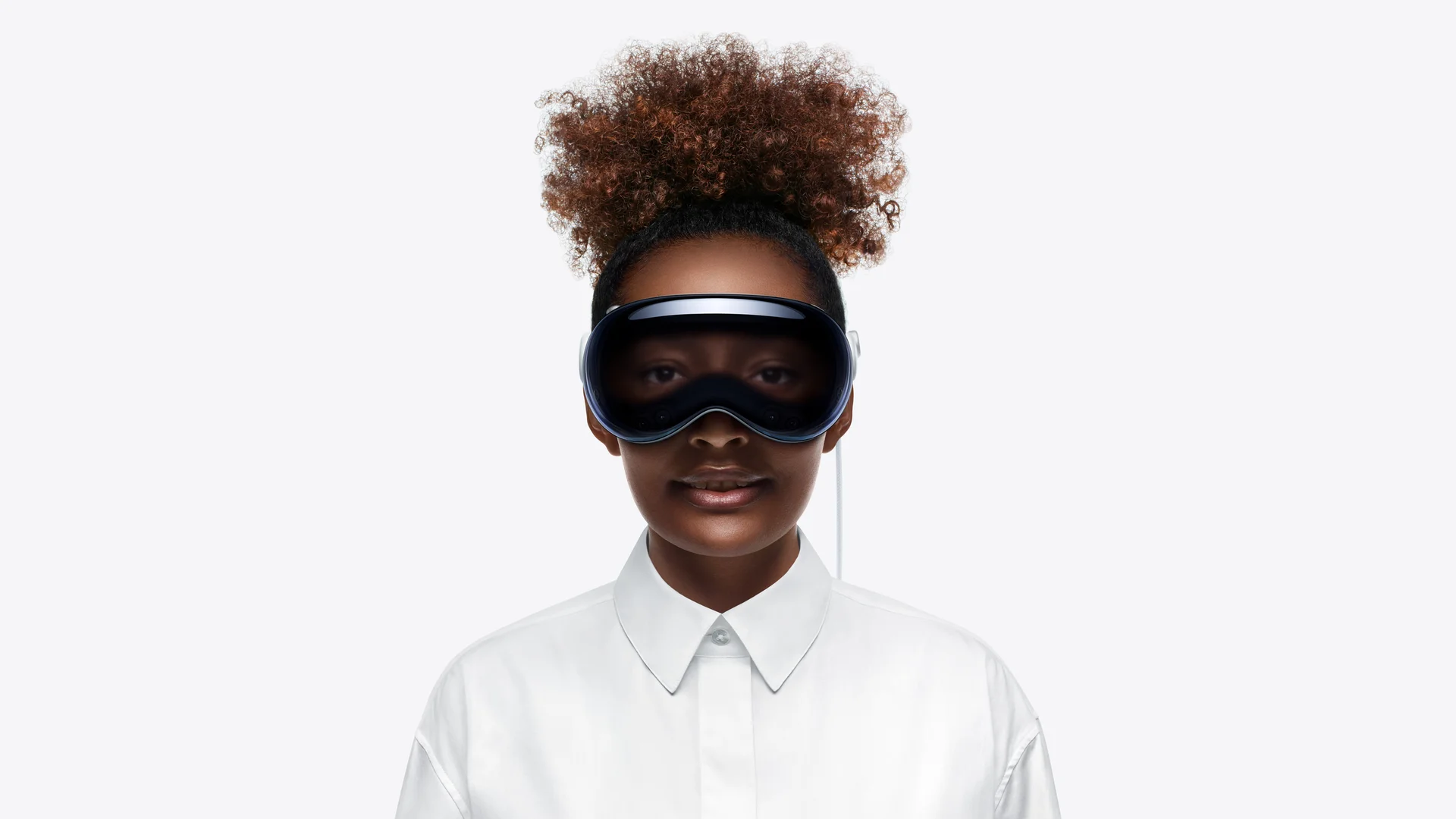
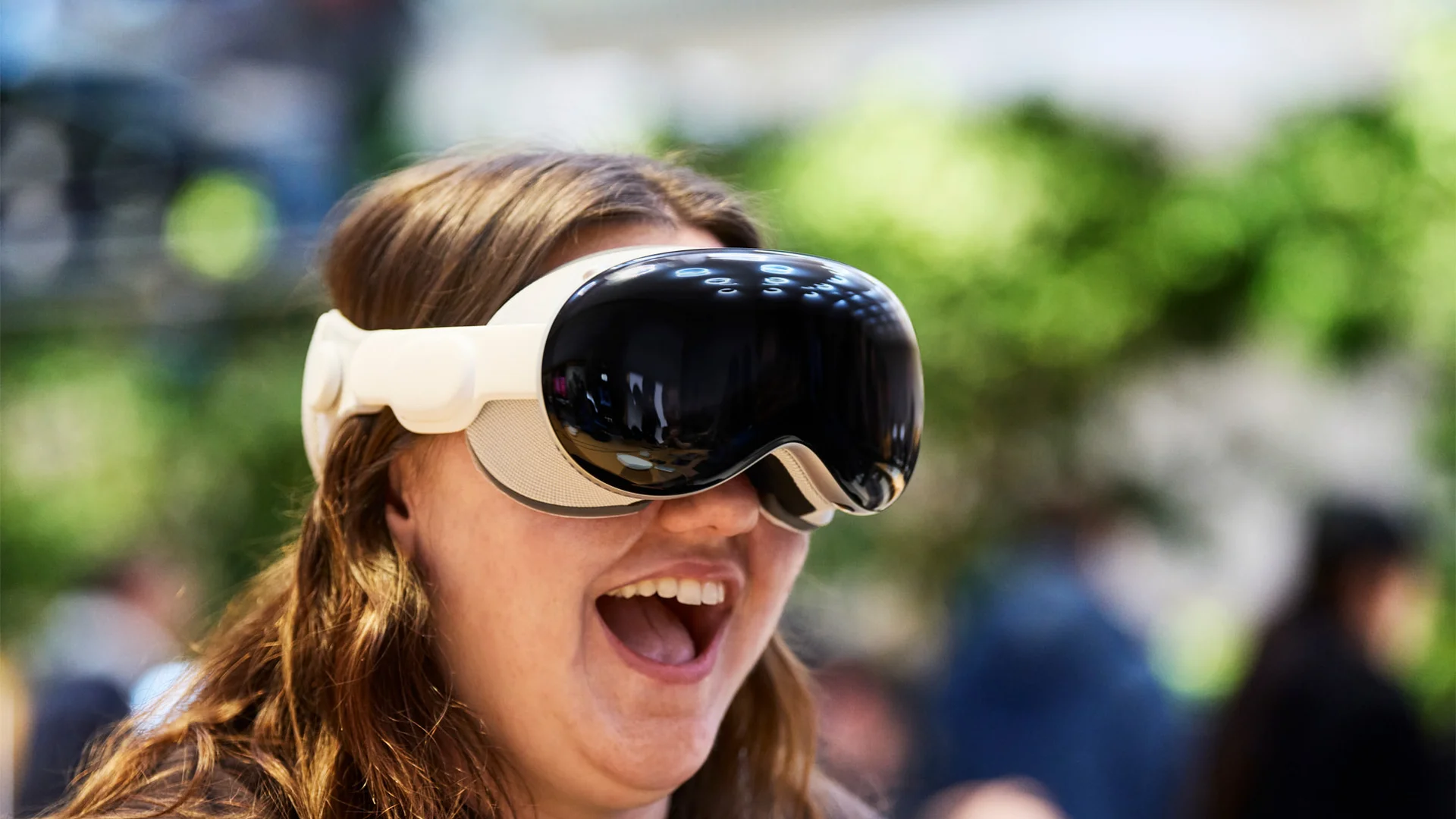
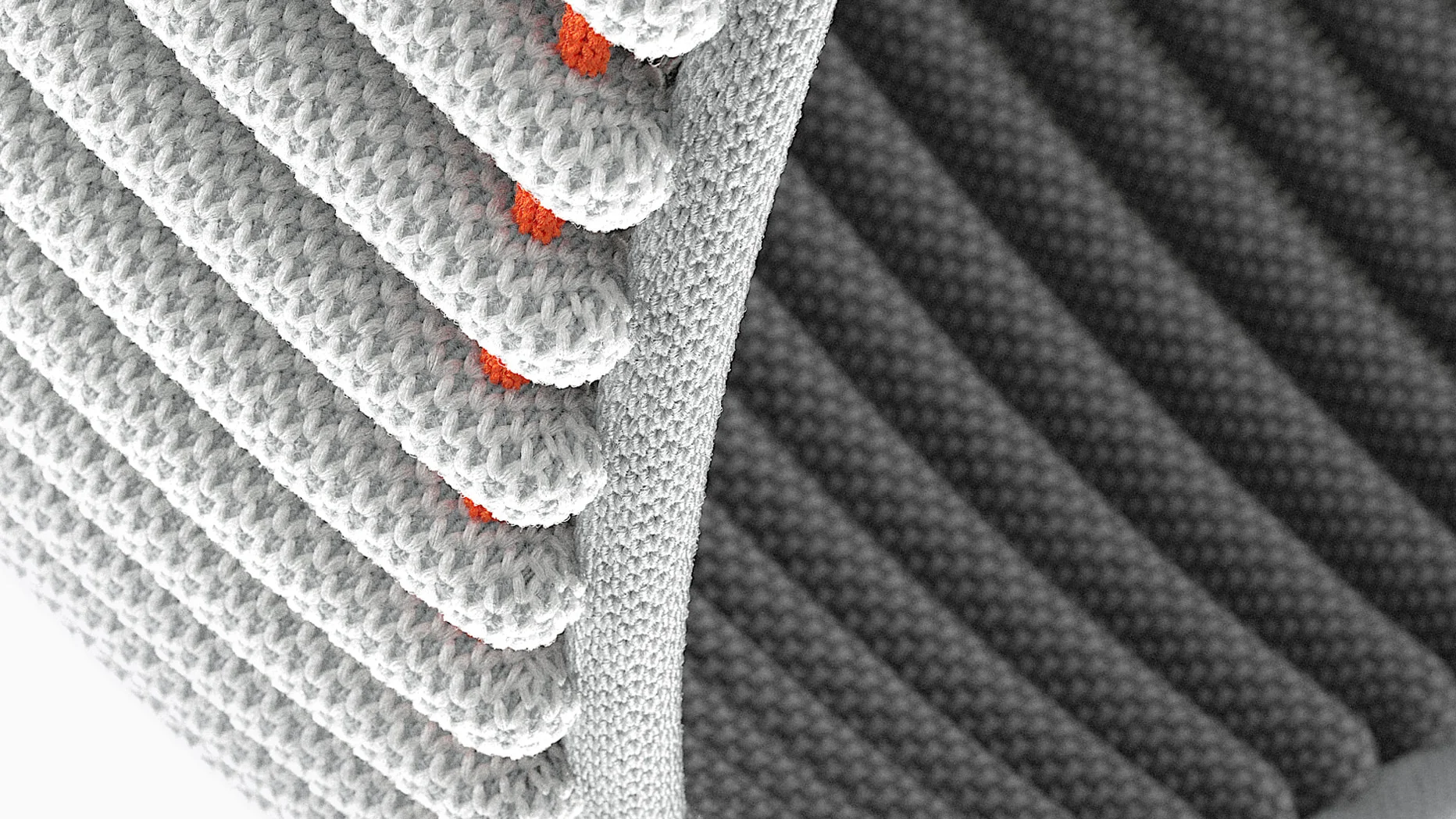
This review is an AI-written assessment. It is based on official specifications and on what published reviews broadly agree on, not on hands-on testing.
What it is
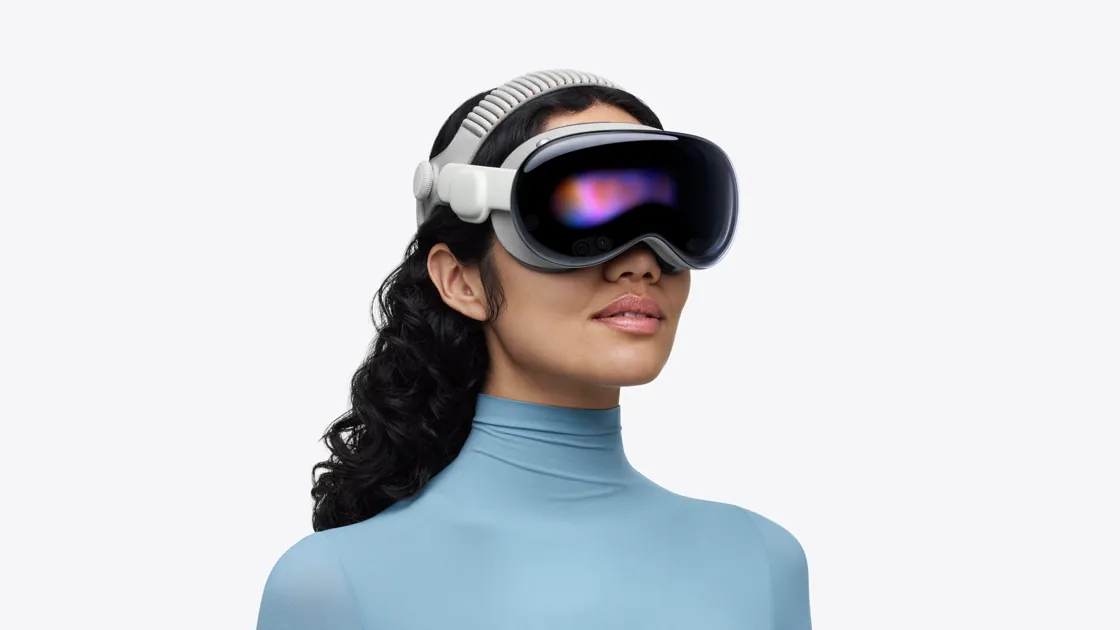
The Apple Vision Pro is Apple's first headset, now usually called the M2 model. Apple announced it at WWDC in June 2023, and it went on sale in the US on February 2, 2024, at $3,499 for 256GB, $3,699 for 512GB and $3,899 for 1TB, according to TechRadar. Apple calls it a spatial computer. It runs visionOS, shows apps as windows in your room through passthrough video, and is controlled with your eyes and hands instead of controllers.
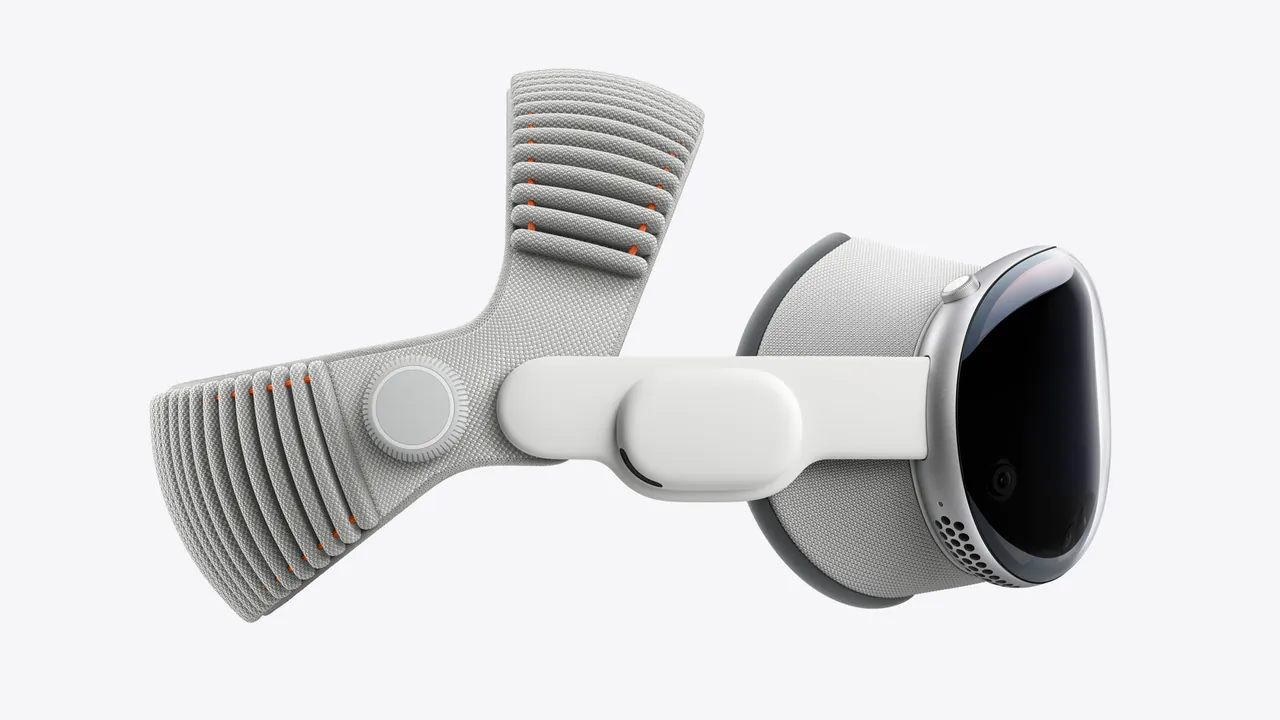
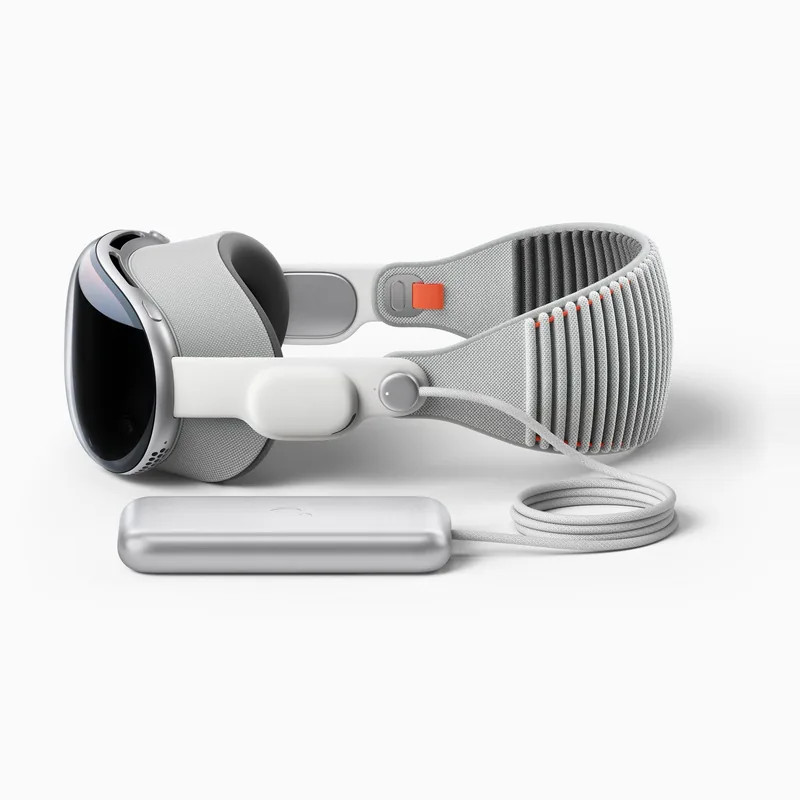
Apple's specifications list an M2 chip with an 8-core CPU and 10-core GPU, a separate R1 chip for sensor processing, and a micro-OLED display system with 23 million pixels and a 7.5-micron pixel pitch, running at 90, 96 or 100Hz. It has two main cameras, six world-facing tracking cameras, four eye tracking cameras, a TrueDepth camera and a LiDAR scanner. The headset weighs 600 to 650 g, depending on the light seal and band. Power comes from an external battery on a cable, rated for up to 2 hours of general use or 2.5 hours of video. The supported IPD range is 51 to 75 mm. Glasses wearers need Zeiss optical inserts, which TechRadar priced at $99 for readers and $149 for full prescriptions.
In October 2025 Apple replaced it with the Apple Vision Pro (M5) at the same $3,499 starting price. Apple says the new model renders 10 percent more pixels, supports up to 120Hz and ships with the Dual Knit Band. That band is also sold separately for $99 and works with the original headset.
Strengths
- The displays. UploadVR called the screens the "most impressive element of its hardware", with no visible pixels and strong contrast. MIXED and TechRadar also singled out how sharp the image is.
- Eye and hand control. Looking at something and pinching to select is the headline feature. MIXED called it a "master class in usability", and Tom's Guide praised the interface along with its "breathtaking 3D video".
- Software and multitasking. UploadVR found visionOS far ahead of Meta's platform for running several apps side by side. TechRadar's reviewer used Mac Virtual Display as a huge, sharp workspace and found it transformative for work.
- Smooth performance. UploadVR reported that the headset "simply does not visibly drop frames".
- Video and passthrough. Reviewers rated Apple Immersive Video and the passthrough among the best they had seen, which makes the headset a strong private cinema.
Weaknesses
- Weight and fit. MIXED described it as front-heavy, with pressure on the cheekbones during long sessions. UploadVR found the default Solo Knit Band uncomfortable after a few minutes, and TechRadar only got comfortable with the Dual Loop Band.
- The battery cable. The tethered pack is always with you, and TechRadar noted that 3D movies seemed to drain it quickly.
- Thin app and game library. MIXED called the software offering "shockingly lacking", with mostly flat 2D apps. With no controllers and hand tracking that lags in fast motion, UploadVR concluded it is "not a headset for gamers".
- Field of view and passthrough accuracy. MIXED found the view visibly narrower than on Meta Quest 3, and UploadVR said the passthrough's scale and perspective were slightly off.
- First-generation rough edges. TechRadar noted that "apps do crash" and called Personas "just this side of creepy". Both TechRadar and UploadVR found text entry impractical without a physical keyboard.
- Price. Every outlet flagged the cost. The Verge summed up the experience as "magic, when it works".
Who it suits
The Vision Pro suits people already invested in Apple devices who want a private big-screen cinema, a large virtual Mac display and the best eye-and-hand interface available. It is a poor choice for VR gaming, and for anyone who wants to wear a headset for hours without experimenting with bands. Apple now sells the M5 model, so the original makes most sense second-hand or at a clear discount. Existing owners can add the Dual Knit Band for better comfort. Our Apple Vision Pro getting started guide covers setup and fit.
How it compares
The Apple Vision Pro (M5) costs the same and adds a faster chip, up to 120Hz, slightly sharper rendering, a little more battery life (Apple quotes up to 2.5 hours of general use) and the more comfortable band. Unless the original is heavily discounted, the M5 is the better buy. The Meta Quest 3, listed at $599.99 for 512GB on Meta's store, has lower-quality displays and passthrough, but it includes controllers, has a far larger game library and costs a fraction as much. Reviewers broadly agreed that the Vision Pro has the better screens and interface, while Quest 3 is the far better value for games and fitness.
Sources
- Apple: Apple Vision Pro (M2) technical specifications
- Apple Newsroom: Apple Vision Pro upgraded with the M5 chip and Dual Knit Band
- UploadVR: Apple Vision Pro Review: A Heavy Portable Cinema & Monitor With A Promising Spatial OS
- MIXED: Apple Vision Pro review: A step toward the immersive future, but far from Pro
- TechRadar: Apple Vision Pro review: The spatial computing revolution is here, and I love it
- MIXED: Apple Vision Pro: Review roundup with verdicts
- The Verge: Apple Vision Pro review (cited via the MIXED roundup)
- Tom's Guide: Apple Vision Pro review (cited via the MIXED roundup)
- Meta: Meta Quest 3