
Meta Ray-Ban Display
by Meta
Meta's $799 smart glasses with a 5,000-nit full-color 600 × 600 heads-up display in the right lens, a 12MP 3K camera, and the included sEMG Meta Neural Band wrist controller.
- Per eye
- 600 × 600 (right lens HUD)
- Max refresh
- 90 Hz
- Field of view
- 20°
- Weight
- 69 g
Overview
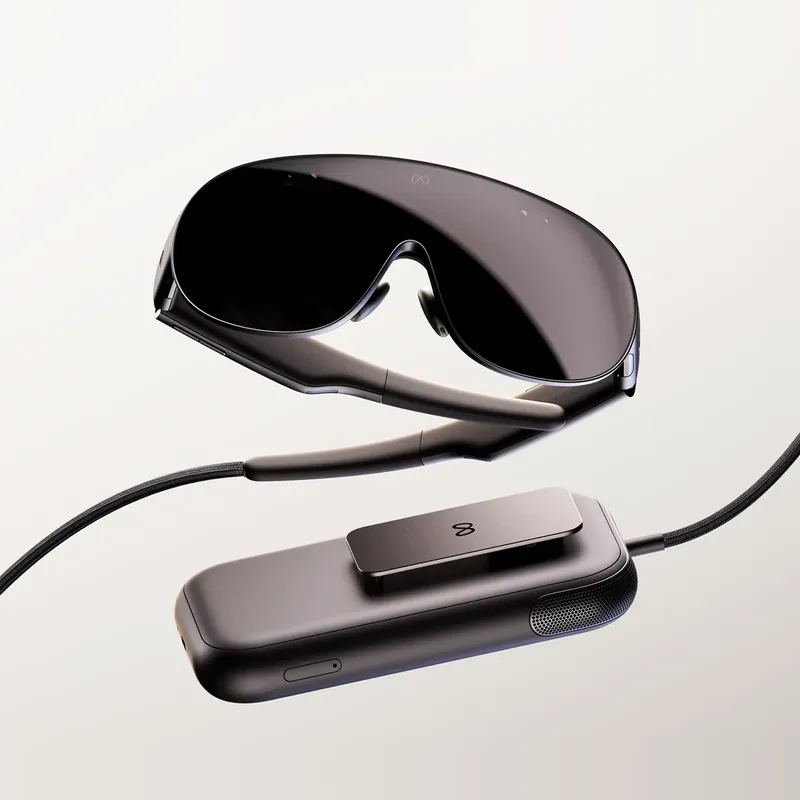
Meta Ray-Ban Display (often referred to by its internal codename Hypernova) is Meta and EssilorLuxottica's first consumer smart glasses with an integrated in-lens heads-up display. Released in late 2025 for $799, the system bridges the gap between the $299 display-free Ray-Ban Meta (Gen 2) camera glasses and the $1,299.99 Meta VR Glasses, bundling a full-color monocular waveguide HUD with the sEMG Meta Neural Band wrist controller.
Display and optics
Embedded inside the right lens is a full-color 600 × 600 waveguide display spanning a 20-degree field of view. Driven at up to 90 Hz (dropping to 30 Hz for static text to save power) and reaching up to 5,000 nits of peak brightness, the HUD stays legible in direct sunlight. Because the optical engine sits in a single lens and only lights up when summoned, the glasses avoid the bulky binocular glow of full AR headsets.
Design, camera and audio
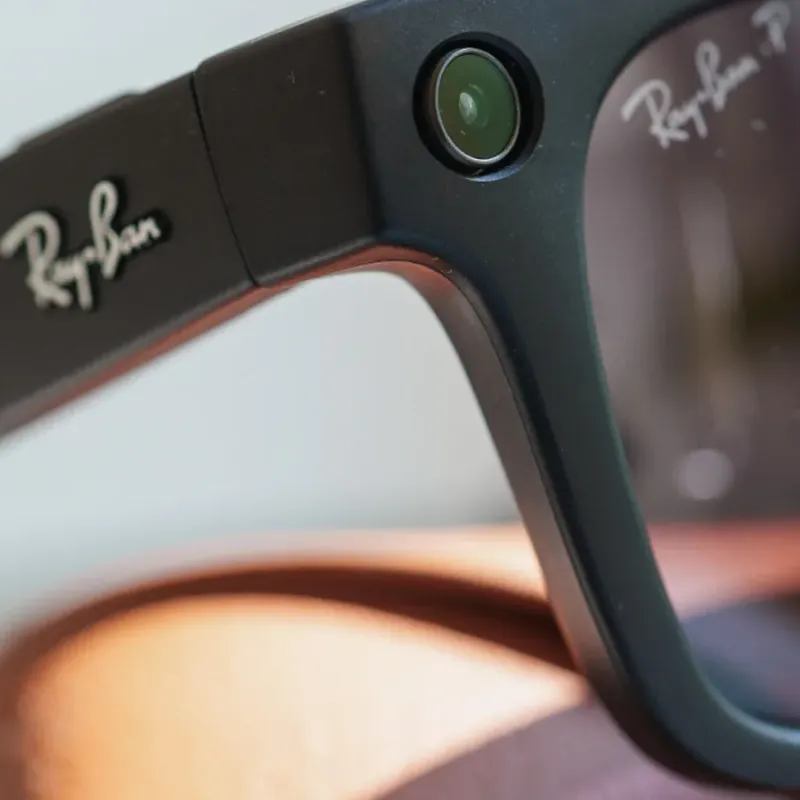
To house the waveguide projector, battery and processor, the frame weighs 69 g—about 20 g heavier than standard Ray-Ban Meta glasses—while maintaining an IPX4 water-resistance rating. A 12MP ultra-wide camera on the front captures 3K video at 30fps with up to 3x digital zoom, and the right-lens HUD acts as a live viewfinder so you can frame shots accurately. Six microphones and open-ear speakers handle calls, voice dictation and spatial audio prompts. Inside sits a Snapdragon AR1-class processor with 2 GB of RAM and 32 GB of storage, rated for roughly 6 hours of mixed use (up to 30 hours with the folding charging case).
Meta Neural Band control
Every pair ships with the Meta Neural Band, a water-resistant wristband that uses surface electromyography (sEMG) sensors to read electrical signals from finger tendons. Wearers scroll menus, pinch to select items, or trace letters on their leg or in a pocket to reply to messages without raising a hand to the temple.
Software and AI features
The HUD displays incoming WhatsApp, Messenger and SMS messages, turn-by-turn walking and cycling maps, live foreign-language subtitles, music controls, and visual cards from Meta AI. Instead of reading long answers aloud in public, Meta AI can silently project step-by-step directions, translations or identification cards directly onto the lens.
Who it is for
Meta Ray-Ban Display suits buyers who love the form factor of Ray-Ban Meta camera glasses but want a private visual screen for framing photos, reading messages, following maps and using Meta AI silently—and who are willing to pay $799 and wear a neural wristband for gesture control.
Specifications
Display & optics
- Per eye
- 600 × 600 (right lens HUD)
- Max refresh
- 90 Hz
- Field of view
- 20°
Hardware
- Chipset
- Qualcomm Snapdragon AR1 Gen 1
- RAM
- 2 GB
- Storage
- 32 GB
- Weight
- 69 g (69 g glasses frame; bundled with Meta Neural Band wrist controller and charging case (up to 30 hours total))
- Battery
- 6 h
Tracking & input
- Tracking
- None
- Hand tracking
- Yes
- Eye tracking
- No
- Controllers
- Meta Neural Band (sEMG wristband, included) + temple touchpad
Release & price
- Status
- Available
- Released
- September 30, 2025
- Launch price
- $799