
Traffix XR Review: Cities Of Tomorrow’s Strict Road Puzzles
Traffix XR: Cities of Tomorrow builds miniature road networks in mixed reality and VR, pairing calm presentation with demanding puzzles and finicky controls.
By James Tocchio
· 3 min read · Source: UploadVR
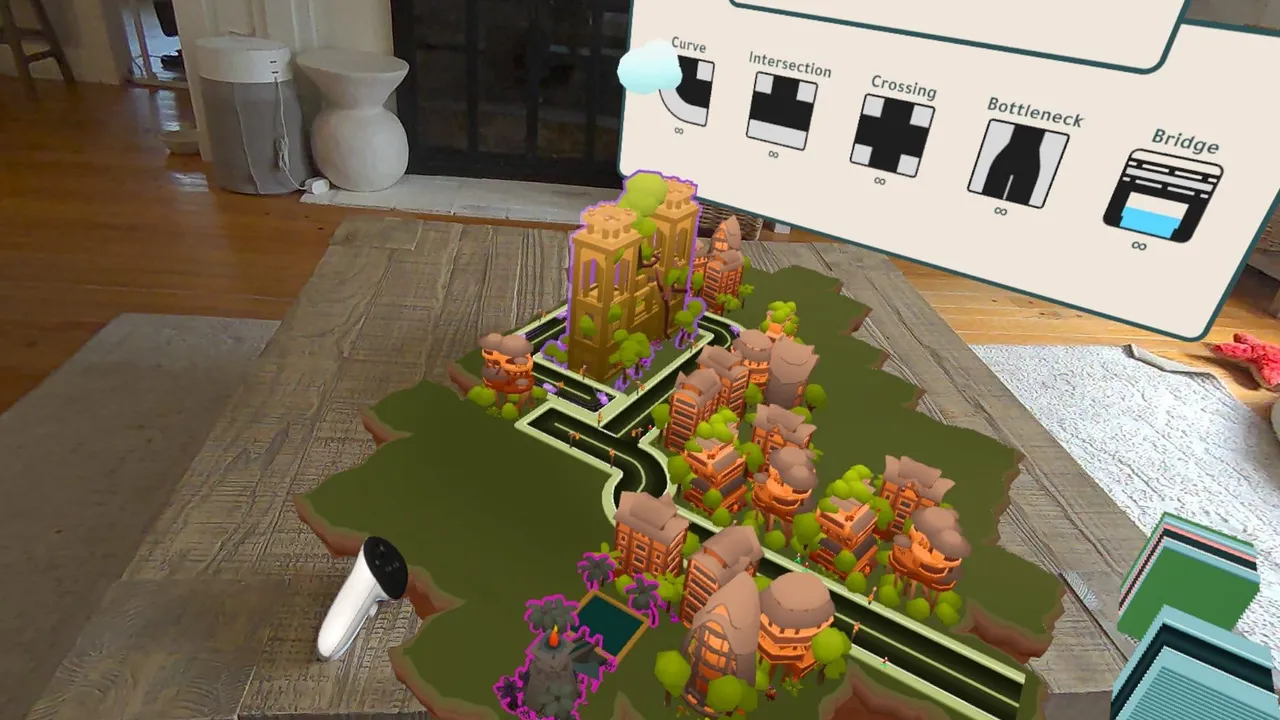
Traffix XR: Cities of Tomorrow is a mixed-reality and virtual-reality traffic puzzle game about building miniature road networks. Its relaxing presentation and tactile design support an engaging challenge, but difficult solutions and unreliable controls prevent an almost perfect experience.
Puzzle games work especially well in VR, where players can reach out and interact with mechanisms and toy-like worlds. Traffix XR is the latest Quest game to use that approach, combining calm surroundings with puzzles that can become genuinely confounding. It was reviewed on Quest 3S and is available for Quest 3, Quest 3S, and Quest Pro.
Traffix XR facts and release details
Infinity Games Ltd developed Traffix XR: Cities of Tomorrow, and Infinity Games is its publisher. The game released on October 15, 2026. Its price is $19.99.
Infinity Games previously released Traffix, a flat-screen traffic-management puzzle game for Nintendo Switch, Android, iOS, and PC. That earlier game has a simplistic, stylized presentation and asks players to direct traffic by tapping traffic lights. Cities of Tomorrow takes a different approach.
Building roads across miniature cities
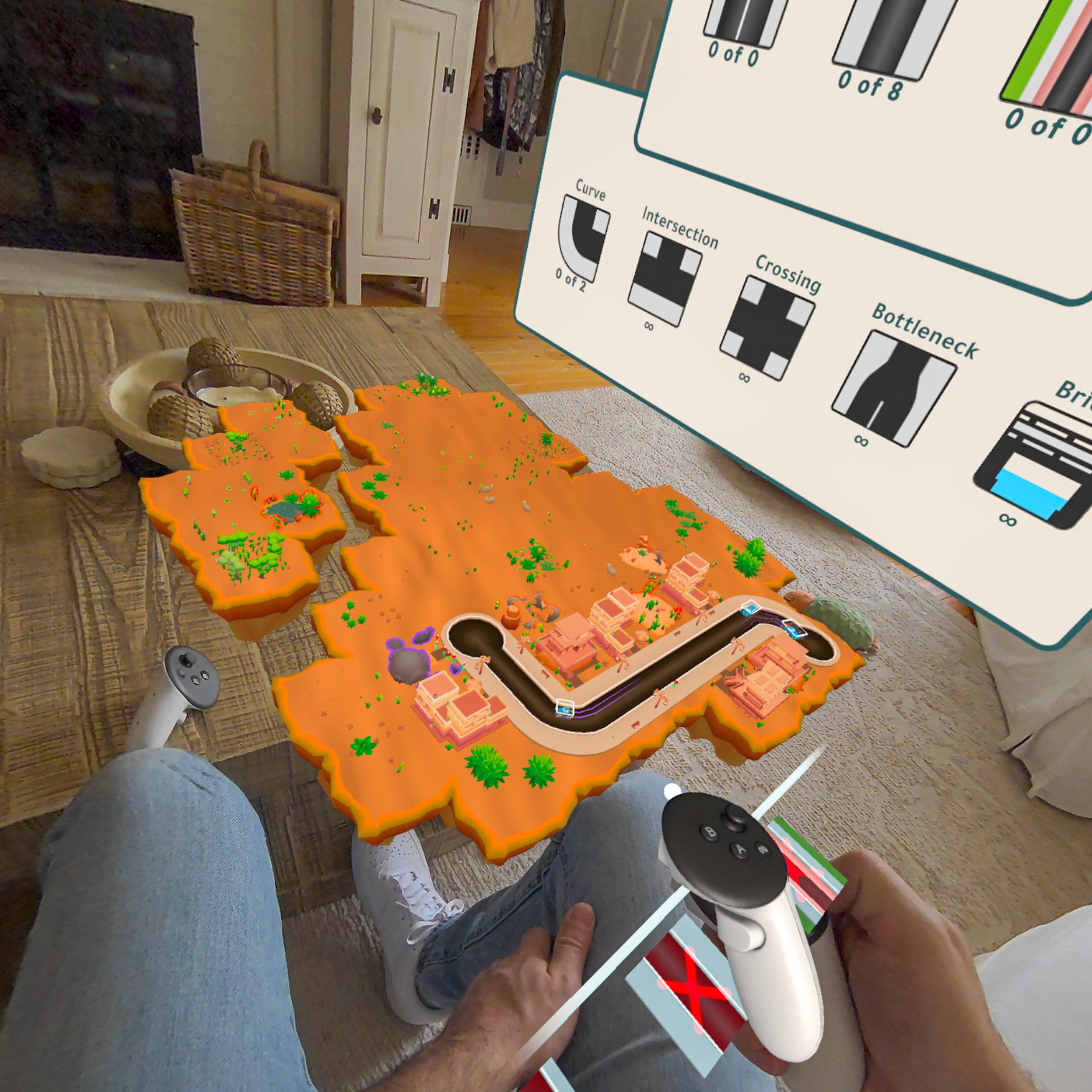
In Traffix XR, players build miniature roads between points of interest on a map. Mixed reality places the map in the surrounding space, while virtual reality places it in a generic, sparsely decorated living room. Connecting two points allows traffic and people to travel between them, activating both locations.
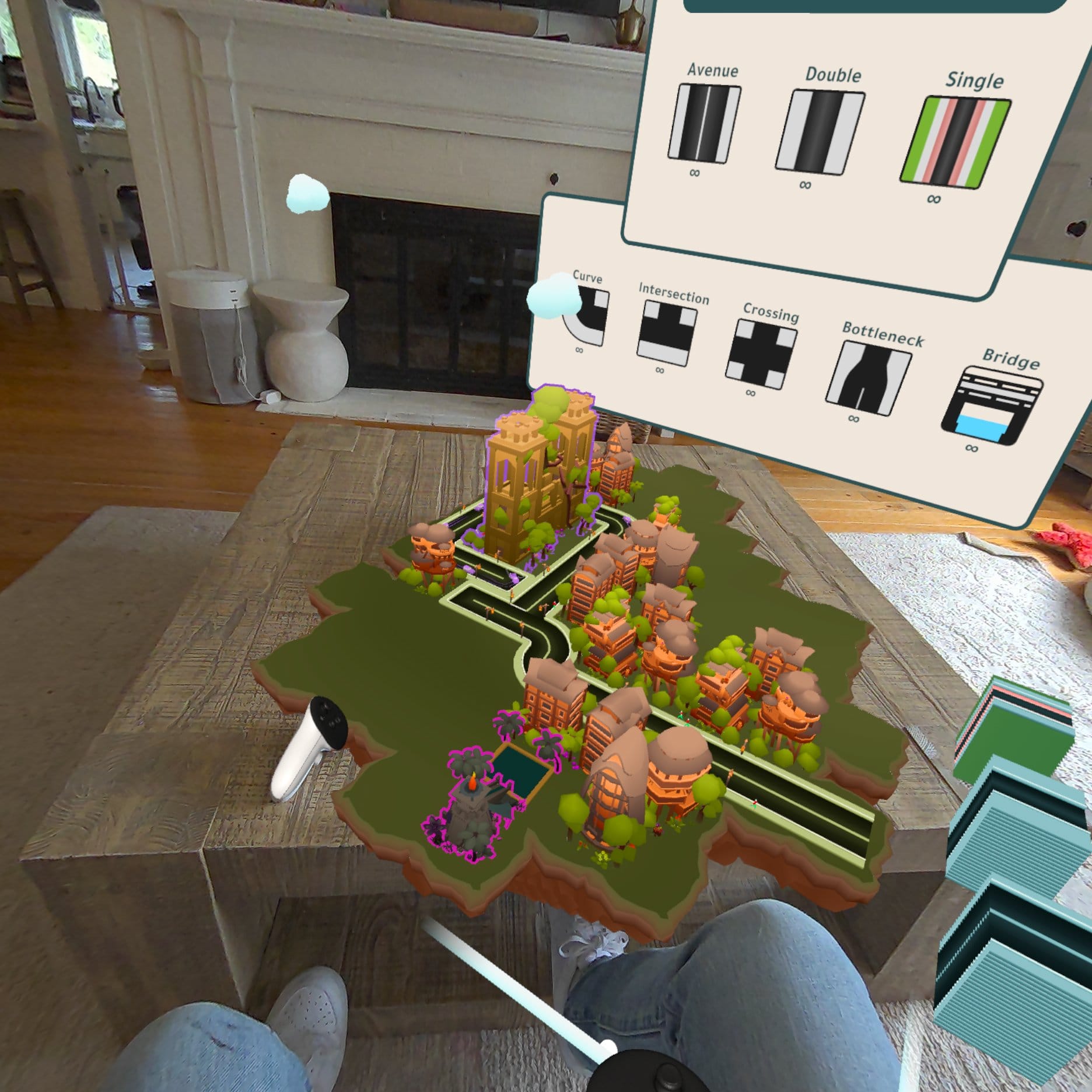
Buildings appear as the city grows, and new points of interest require additional connections. The objective is to connect every point on the map successfully. Players can erase road tiles and redraw routes at any time, but boulders, forests, rivers, and lakes block construction. Bridges can cross some obstacles, though their supply is limited.
Each stage restricts the number of road tiles and road types available. The maps are arranged around those limits, so success usually depends on finding routes that connect every location with the permitted tiles and configurations. Players must work out how to travel from Point A to Point B and beyond.
Players familiar with Mini Motorways will recognise the basic structure. Newcomers can learn it quickly because the gameplay is intuitive and the built-in tutorial teaches everything needed in about ten minutes.
Comfort options and control problems
Traffix XR has no locomotion. It supports mixed reality and virtual reality, seated or standing play, and a choice of dominant hand. Players can use controllers or hand tracking.
Neither control method feels completely reliable. Grabbing roads with controllers or fingertips can be inconsistent. Erasing roads and connecting new sections to existing roads can also be troublesome.
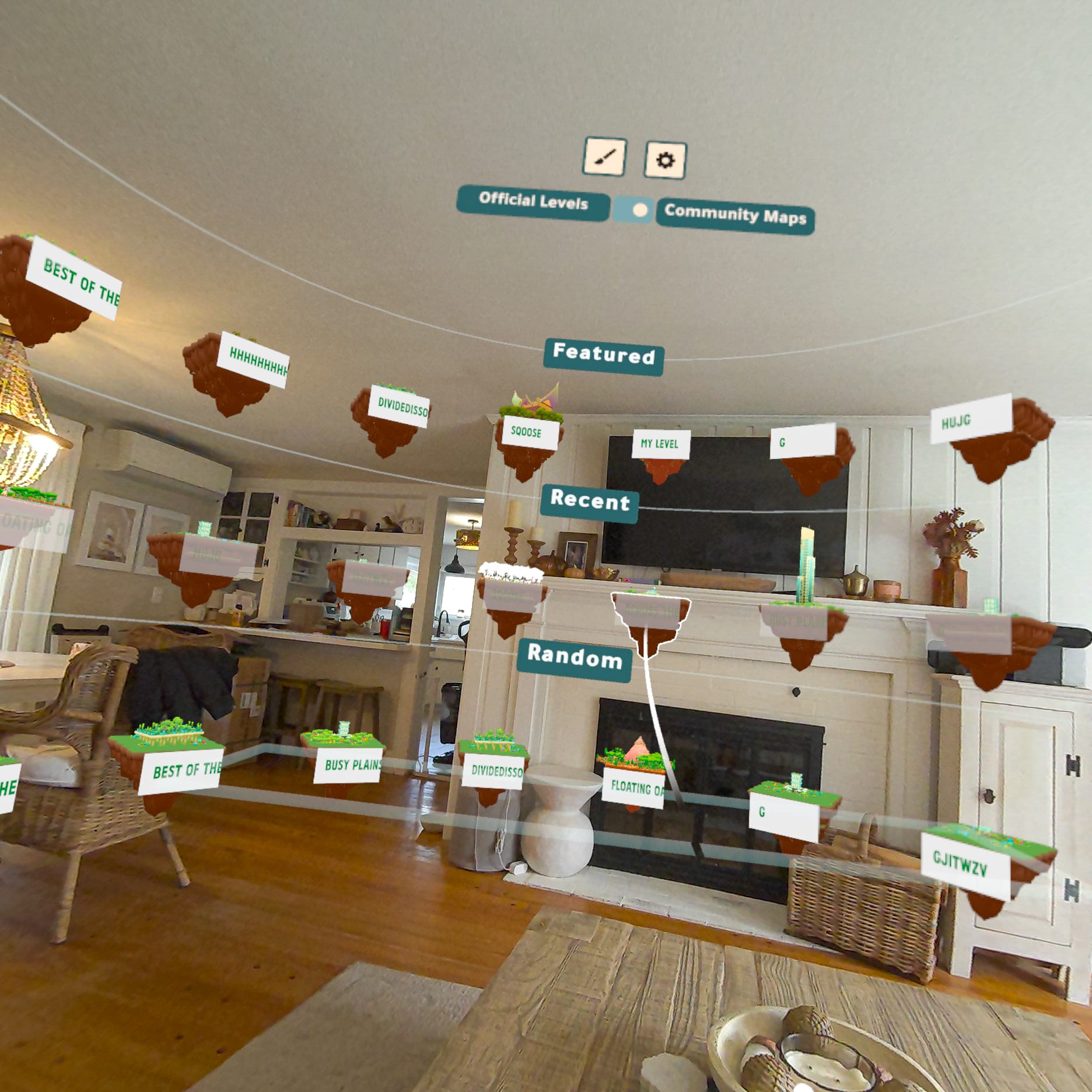
Stage selection adds another irritation. Levels are chosen by rotating a mass of floating islands around the player, and that process can feel awkward. The control language lacks cohesion: some actions use triggers, while others use grip buttons. Because natural interaction matters during road construction, these inconsistencies slow the game considerably.
Detailed maps and demanding solutions
The miniature worlds are charming and rich with detail. The soundtrack is smooth, playful, and relaxing, while the central road-building mechanic remains engaging. The game includes a vast quantity of maps across a variety of biomes, as well as a custom map maker for players who want to build and share their own creations.
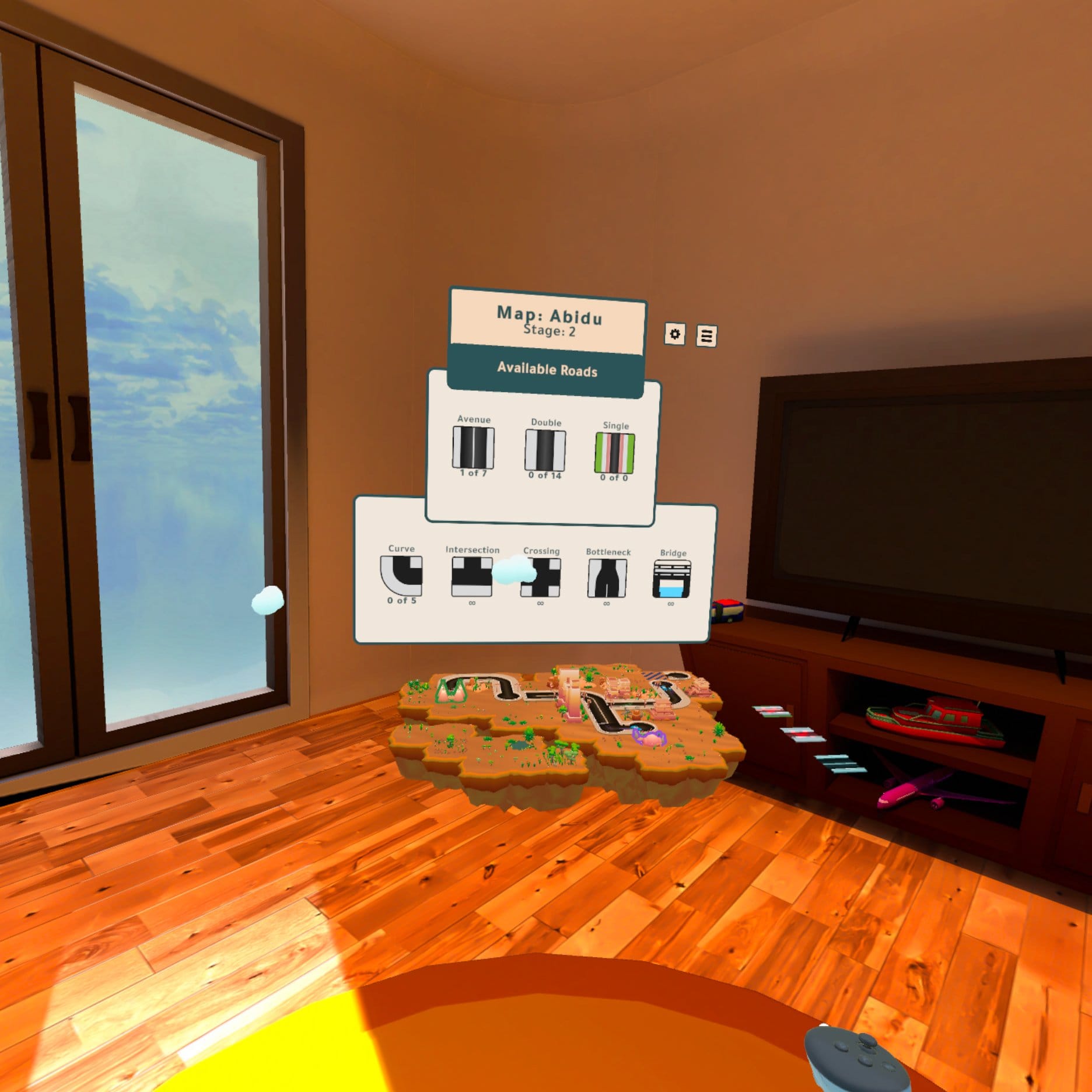
The difficulty rises sharply. By the fifth or sixth level, finding the right route through a difficult wilderness can require serious effort, especially when only specific tiles and configurations are available. Success feels satisfying: citizens reach their destinations, the miniature city grows, and the usually three-stage level is cleared.
That satisfaction is offset by frustration. Many puzzles appear to allow only one intended solution, or something very close to it. A traffic-management game built around creative roadway construction feels limited when stages demand one precise route.

Traffix XR review verdict
Traffix XR: Cities of Tomorrow combines charming presentation, relaxing audio, and an engaging traffic-puzzle structure. Mixed reality makes its small worlds feel at home in the player’s living room, while the VR mode works nearly as well.
Finicky controls and rigid, difficult solutions hold it back. Too many stages feel excessively demanding or solvable through only one route, and inconsistent interactions interrupt the flow. Traffix XR remains a good Quest puzzler for fans of the genre, but its strict solutions and control problems limit the experience.
UploadVR uses a 5-Star rating system for game reviews. Read the breakdown in its review guidelines.
Enjoyed this story?
Like it to tell the editors, or save it to read later.
Comments
Sign in to join the conversation.
Sign inNo comments yet. Start the conversation.
·