
RAID VR Demo: Customs Checks Meet Space Combat
RAID VR’s Steam Next Fest demo builds an enjoyable customs-inspection loop around space combat, but restrictive arenas, slow movement and low difficulty hold it back.
By Mike Johnson
· 4 min read · Source: UploadVR
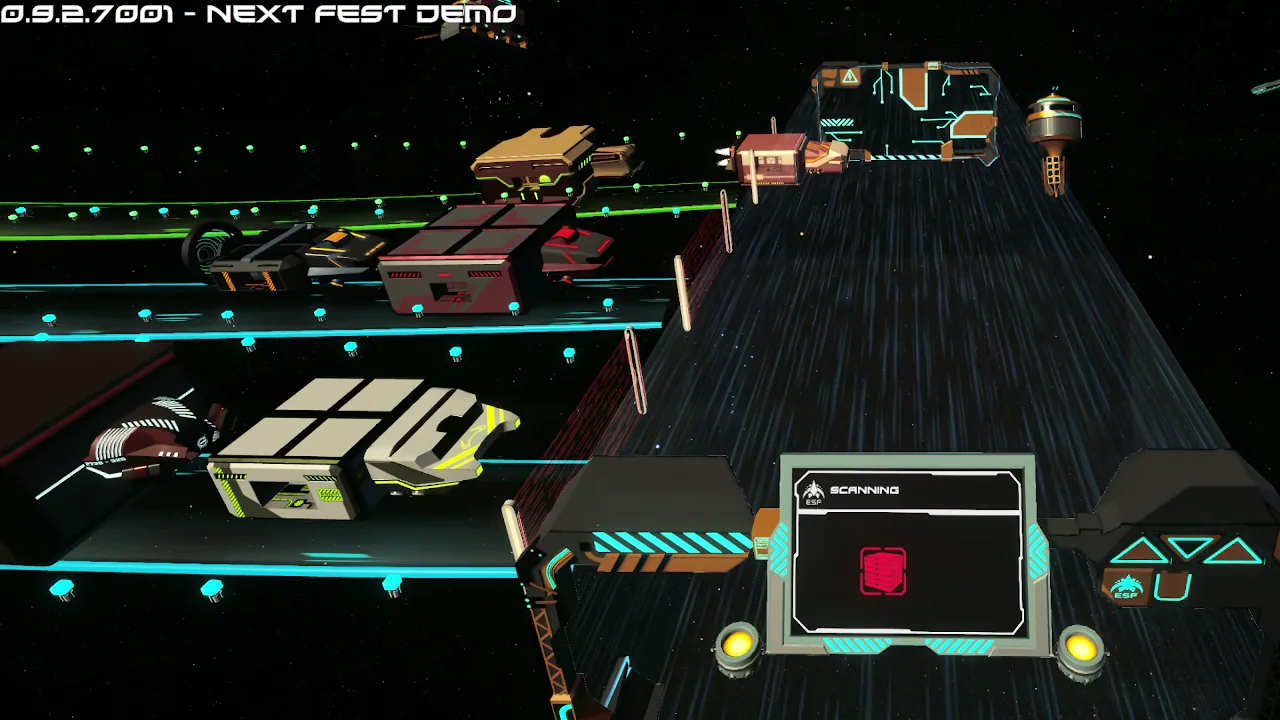
RAID VR is a co-op sci-fi roguelite shooter built around inspecting spaceships, identifying contraband and raiding smugglers. This PC VR demo, tested during Steam Next Fest, has an intuitive gameplay loop that is easy to learn but often feels too safe.
The concept sits somewhere between the charming Border Bots and an extraction shooter such as Ghosts of Tabor. You play a pseudo-intergalactic customs agent scanning ships at a checkpoint. When a scan reveals illegal goods, you intercept the ship, board it and remove its contraband by force.
RAID VR demo details
- Type: Co-op sci-fi roguelite shooter
- Developer: FusionPlay
- Publisher: Impact Inked
- Platforms: Steam demo; the full game is also coming to Quest
- Release date: TBA
- Price: Free-to-play demo; the Quest store lists the game at $12.99, with a $9.99 preorder available now
The demo begins at rank 4 and ends at rank 6. Reaching rank 6 took a little over thirty minutes. The demo supports two-player co-op, while the final game is planned to support four players.
Steam lists the demo as available for Next Fest and the full game as coming soon. The Steam listing also describes a demo run that can take about 20–50 minutes depending on play style and progression.
Scanning ships and processing contraband
Each shift begins with spaceships arranged across multiple lanes. A control panel lets you switch between them and check icons for illegal goods, with the relevant contraband varying by type and color. Once a scan finishes, you have limited time to let the ship pass or intercept it.
Interception pulls the ship to your station with a tractor beam. You then board it and fight its smugglers. The control panel is intuitive and understandable at first sight. RAID VR uses colorful cel-shaded visuals that work well in the headset, while the sound design supports the action.
The game also tries to make its systems physically immersive. Interacting with the control panel and even navigating the options menu are physical actions rather than standard flat-interface operations.
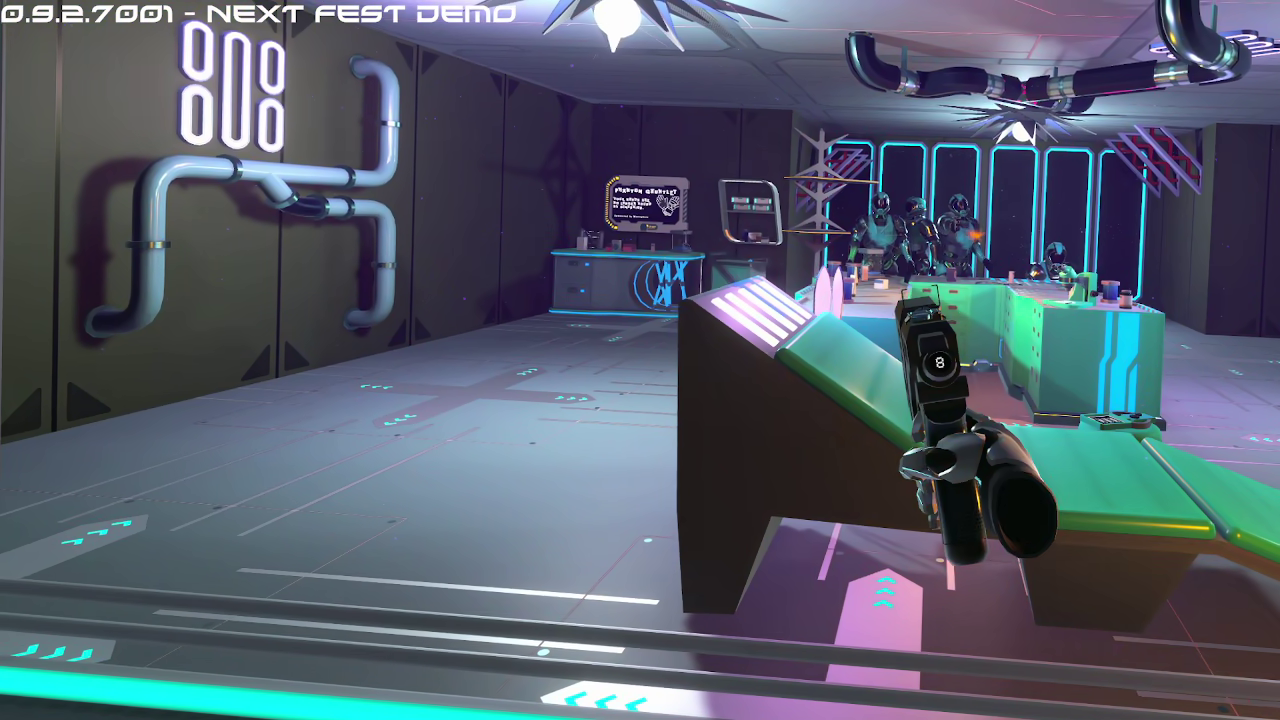
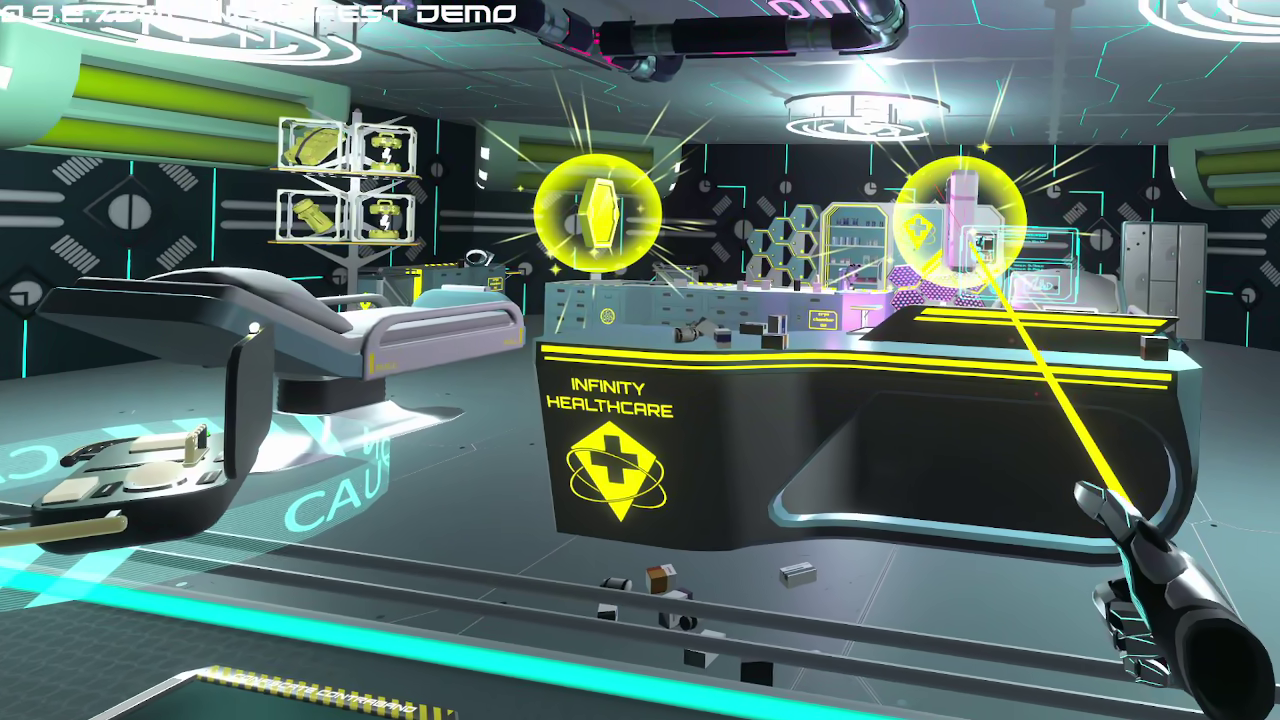
Some intercepted ships do not contain combat. You enter, collect available loot, seize the contraband and leave in roughly half a minute. That keeps a shift moving, but it can be deflating when an expected shootout never arrives. A free-roaming search for hidden bonus loot could have added a risk-and-reward choice for players willing to sacrifice time.
Restricted combat spaces
The main weakness appears after boarding an intercepted ship. Instead of a dynamic roomscale firefight, movement is limited to a rectangular border at the front of the room. From there, you dispatch robotic enemies at range and defend against sword-wielding bots.
The restriction feels excessive, especially because the smugglers can be defeated in less than a minute. A telekinetic grab system then pulls contraband toward you before you drop into a vortex below your original standing position. The sequence works, but full room movement could make it more engaging. The rectangle already feels small for one player, raising questions about how it will scale to four-player sessions.
The limited arena has a practical reason. Every shift has a time limit, and the goal is to process as many ships as possible. Seconds continue to pass while an intercepted ship is pulled to the station and docked, so a contained encounter keeps the schedule manageable.
RAID VR also includes smuggler ships that warp in and require immediate attention. These are full ship raids with multiple rooms. Some rooms are locked and require key cards. Because these raids allow movement through a full room, returning to the smaller scanned-ship interceptions makes their restrictions feel even more pronounced.
Weapons, movement and difficulty
Most weapons feel functional and include unusual designs. One rocket launcher fires tiny aliens, an amusing idea that remained funny each time it was used. Two-handing that weapon brought noticeable jank.
Some weapons and the shield use timed reloading. You cannot keep firing both guns without pause, and mistiming a reload can leave you performing a Matrix-style dodge to avoid incoming fire. This approach will divide players. It worked for this demo, but fans of run-and-gun shooters who prefer manual reloading may want more control, especially because the game selects your loadout shift by shift.
Walking speed is slow, and there is no sprint option. The smugglers and their bullets are also slow, making attacks easy to dodge. Even when four bots were shooting at once, the demo rarely felt threatening.
The accessible design removes some excitement. You often want to move faster and act more dynamically than the game allows. The core loop remains easy to understand and mostly enjoyable, but the action needs adjustment and currently feels too easy.
Comfort and test setup
RAID VR supports snap turning and smooth turning, with toggles that adjust height for seated play. Limited teleport movement is available. The core interception sequences use a small enough play space for roomscale play when the player has sufficient room.
More accessibility options would help, including a motion vignette. Overall, the comfort settings should work for most players.
Testing used a Ryzen 7 9850X3D processor, 32 GB of DDR5 RAM and an RTX 5070 Ti GPU. The game ran on a Meta Quest 3 through the Virtual Desktop app with the Godlike graphics preset, while in-game graphics were set to their highest level. The Steam page lists the minimum and recommended PC specifications.
RAID VR’s demo is enjoyable enough to keep the full game on the wishlist. Its inspection, interception and raiding structure works, but the restrained combat spaces, slow movement and low difficulty may make that enjoyment fleeting across longer sessions.
Enjoyed this story?
Like it to tell the editors, or save it to read later.

Comments
Sign in to join the conversation.
Sign inNo comments yet. Start the conversation.
·