
VRChat face tracking: Native support reaches open beta
VRChat face tracking enters open beta with Unified Expressions, new SDK builds, headset support, avatar limits and no use of synced parameter budgets.
작성자 vrBlogs
· 2분 읽기 · 출처: UploadVR
VRChat now supports vrchat face tracking natively in its open beta client and in Avatars SDK 3.10.6-beta.1 and later, according to UploadVR. The system syncs the full Unified Expressions set to other players without using an avatar’s custom synced parameter budget.
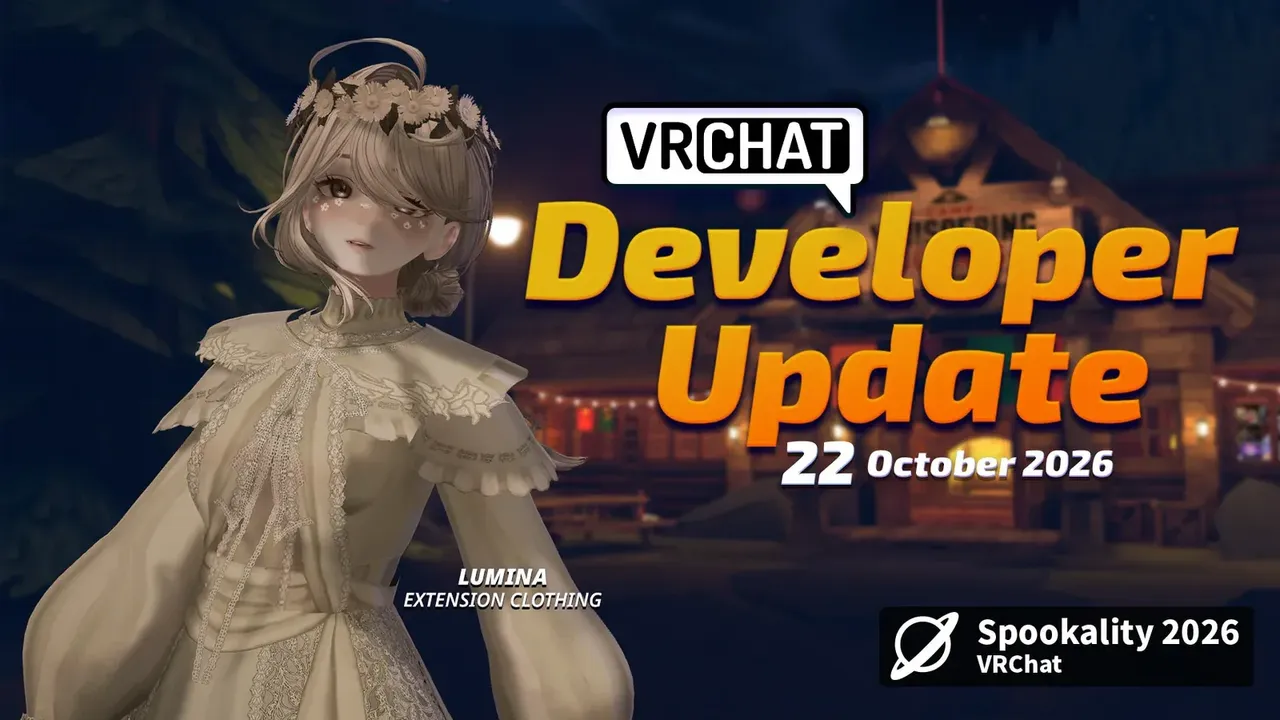
Creators configure expressions in a new Face Tracking section of the Avatar Descriptor. VRChat Inc. first detailed the system as “High Fidelity Face Tracking” in its September 24 developer update.
How native face tracking works
The feature uses Unified Expressions, a standard from community project VRCFaceTracking (VRCFT). It works alongside VRChat’s audio-driven visemes, eye look and eyelids. Creators can drive blendshapes across multiple meshes and layer “Blendshapes Sets,” such as happy or angry sets.
Parameter behaviors can combine or limit tracking values without requiring complex animator setups. VRChat’s creator documentation says the full Unified Expressions data syncs to other players and “does not consume your custom synced parameter budget.”
The September update says this data is sent much like NetIK, so fidelity can drop for avatars that are far away. Blended Shapes and Simplified Parameters are not supported yet.
VR.org News reports that Face Tracking supports up to 16 Skinned Mesh Renderers. Each custom expression is capped at 512 characters, 128 tokens and 64 instructions. After simplification, an avatar can contain 512 instructions across its expressions.
SDK status and release limits
Update (2026-11-01): VR.org News reports that VRChat released Avatars SDK 3.10.6-beta.2 on October 19, 2026, followed by 3.10.6-beta.3 on October 23, 2026. The newest stable release is SDK 3.10.5 from September 4, 2026, while face tracking remains beta-channel work.
The feature is available through VRChat’s open beta client and beta SDK builds, not the newest stable SDK. VRChat’s October 22 update confirms that SDK 3.10.6 was still being tested.
Headsets and input sources
Tracking data comes in over OSC, including from the latest VRCFT beta on Steam. VRChat also offers webcam-based Selfie Expression on desktop PC and Android.
UploadVR names Pico 4 Pro and Enterprise, Meta Quest Pro and Samsung Galaxy XR as the most popular face-tracking headsets. Community tools add support for Quest 3 and 3S. Bigscreen Beyond 2e offers eye tracking only.
For Meta’s upcoming VR Glasses, UploadVR reports that Meta will not give third-party apps access to visual face-tracking data at launch. Developers will get eye tracking plus an audio-driven source called Audio to Expressions instead.
What changes for avatar creators
Face-tracked avatars have long depended on custom parameter setups that use each avatar’s limited synced budget. Native support sends the full Unified Expressions data without consuming that custom synced parameter budget, while creators still work within the current renderer, expression and instruction limits.
According to UploadVR, avatar creator Hash has already updated several popular Booth avatar packages with beta versions. The feature remains limited to the open beta, and the current SDK status remains separate from SDK 3.10.5, the newest stable release reported by VR.org News.
이 글이 마음에 드셨나요?
좋아요를 눌러 편집자에게 알리거나, 나중에 읽도록 저장하세요.

댓글
대화에 참여하려면 로그인하세요.
로그인아직 댓글이 없습니다. 대화를 시작해 보세요.
·