VR Headset Battery Life Explained: Past Limits, 2026 Breakthroughs & Future Optimization Guide
Why standalone VR headsets still hit a 2-hour battery wall in 2026 despite 36 Wh packs, how external pucks, silicon-carbon cells, and eye-tracked foveated rendering will reshape 2027–2030 hardware, plus a complete step-by-step setup guide for unlimited wireless play.
- शुरुआती
- 15 मिनट
- Late 2026 – 2027 XR Hardware Lineup को जाँचा गया
- अंतिम बार 7 नवंबर 2026 को जाँचा गया

द्वारा LongZ
अपडेट किया गया · पढ़ने में 8 मिनट
आपको क्या चाहिए
- A USB-C Power Delivery (PD 3.0) charger or power bank rated at 27W–45W+ (avoid legacy 5V/2A USB-A cables)
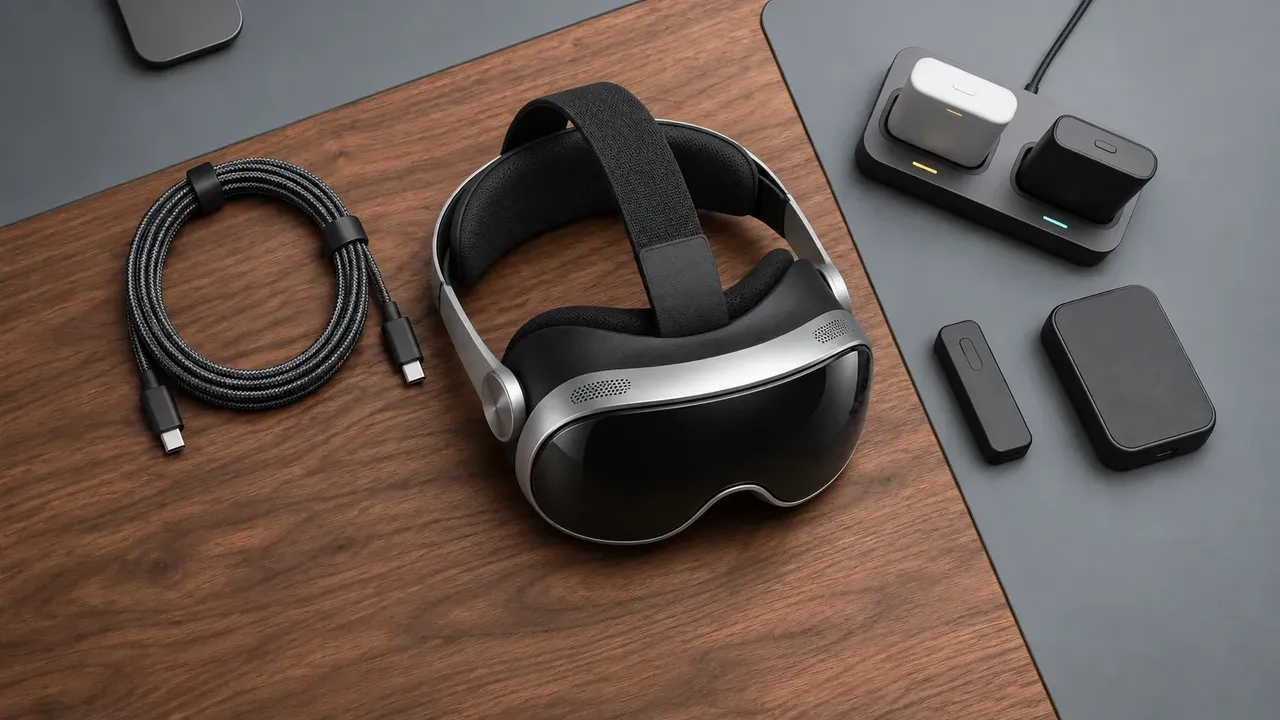
- A 90-degree right-angle braided USB-C cable and two Velcro strain-relief clips when using external pocket batteries
- Optional: A magnetic hot-swap halo head strap with two battery packs for uninterrupted room-scale VR sessions
- 1.5V constant-output rechargeable Lithium AA cells for motion controllers that take AA batteries
For nearly a decade, standalone virtual reality and mixed reality hardware has evolved at breakneck speed. Grainy sub-2K displays have given way to razor-sharp dual 4K micro-OLED panels, thick Fresnel lenses have shrunk into compact pancake optics, and mobile processors now run desktop-grade spatial workspaces alongside continuous on-device AI.
Yet one stubborn number has barely moved whether you spend $349.99 on a family headset or $3,499 on a flagship spatial computer: native standalone battery life remains locked inside a 2-to-2.5-hour window.
This in-depth report and practical guide examines why early VR headsets created ergonomic and repairability headaches, how hardware makers and third-party ecosystems reshaped power delivery by late 2026, what manufacturers are building for 2027–2030 to achieve all-day spatial wearables, and how you can configure an effectively "infinite" wireless power setup today.
1. The Legacy Era (2019–2023): Front-Heavy Visors and Repair Nightmares
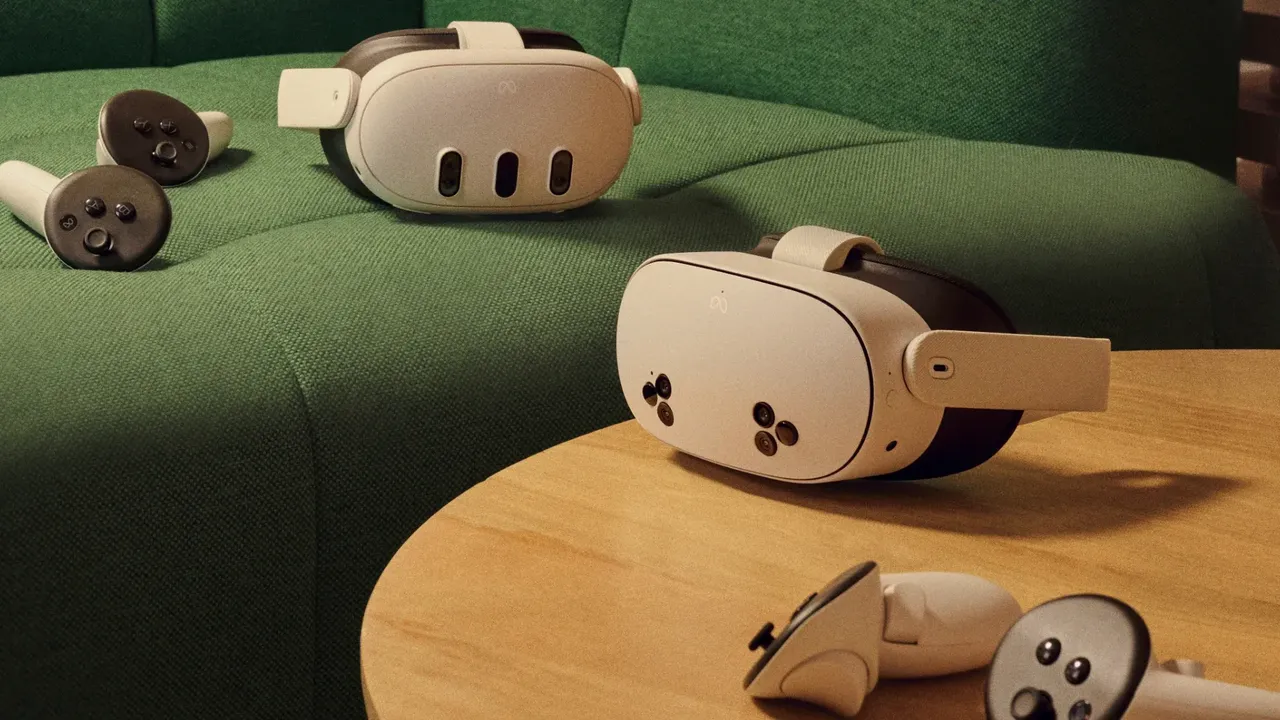
When standalone VR went mainstream with the original Oculus Quest and the Meta Quest 2, engineers packed every single component—processor, cooling fan, tracking cameras, displays, lenses, and a lithium-ion pouch battery—inside one sealed plastic box strapped to the front of your face.
Decoding VR Battery Specs: Why mAh Misleads and Wh Matters
Shoppers comparing headset spec sheets frequently focus on milliampere-hours (mAh), which is misleading whenever battery packs operate at different voltages. True stored energy is measured in Watt-hours (Wh), calculated as (mAh × Nominal Voltage) ÷ 1,000.
A standard single-cell visor battery runs around 3.85V–3.87V, whereas multi-cell external packs—like the Apple Vision Pro Battery—operate above 11V–13V. Looking only at mAh makes Apple's 3,166 mAh pack appear smaller than the Meta Quest 3's 4,879 mAh internal cell, even though Apple's high-voltage pack stores nearly twice as much total energy (35.9 Wh versus 18.88 Wh).
| Headset | Rated mAh | True Energy (Wh) | Battery Placement | Real-World Runtime |
|---|---|---|---|---|
| Meta Quest 2 | 3,640 mAh | ~14.0 Wh | Sealed front visor | 2.0 – 2.5 hrs |
| PICO 4 | 5,300 mAh | ~20.4 Wh | Sealed rear strap | 2.0 – 2.5 hrs |
| Meta Quest 3 | 4,879 mAh | 18.88 Wh | Sealed front visor | 1.8 – 2.2 hrs |
| Meta Quest 3S | 4,324 mAh | 16.74 Wh | Sealed front visor | 2.0 – 2.5 hrs |
| PICO 4 Ultra | 5,700 mAh | ~21.9 Wh | Rear counterweight strap | 2.5 – 3.0 hrs |
| Valve Steam Frame | ~5,600 mAh eq. | 21.6 Wh | Integrated chassis | 1.0 hr local / 1.5–2.0 hrs stream |
| Apple Vision Pro (M5) | 3,166 mAh (high-V) | 35.9 Wh | External aluminum pack | 2.5 hrs general / 3.0 hrs video |
| Samsung Galaxy XR | ~9,000+ mAh eq. | 36.0 Wh | External tethered pack (302g) | 2.0 hrs general / 2.5 hrs video |
Three Structural Flaws of Early Standalone Batteries
- Facial Pressure and Neck Torque: Placing a 70–95 gram battery brick directly behind the front glass maximized forward leverage against the cheekbones. Users over-tightened stock elastic straps to stop the visor from slipping, causing forehead pain well before the battery hit zero.
- Mixed Reality Power Spikes: Upgrading from monochrome tracking to full-color passthrough on the Meta Quest 3 pushed active system power draw to 15W–22W. Despite a 35% larger battery than Quest 2, heavy mixed-reality games often emptied the charge in 90 to 110 minutes.
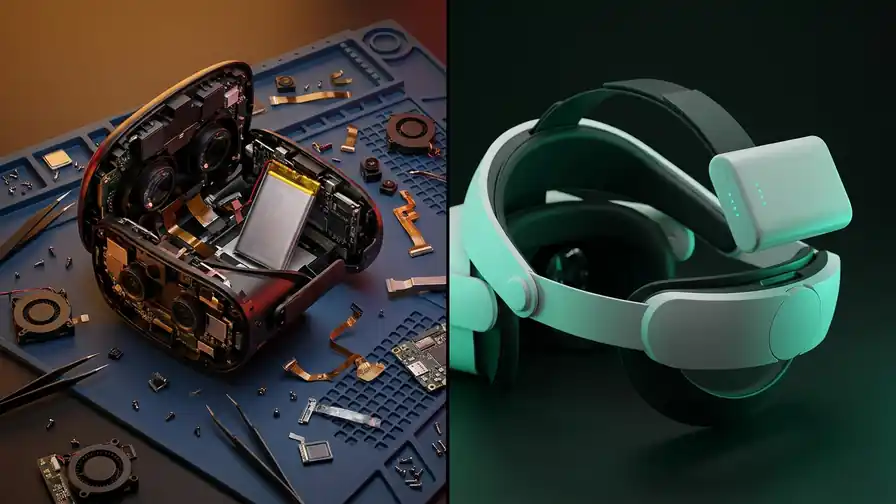
- The Sealed-Visor Replacement Trap: Lithium-ion pouch cells lose roughly 20% capacity after 350–500 full cycles—around 18 months of daily VR fitness or social sessions. Yet teardowns of sealed visors reveal internal batteries glued beneath roughly 50 screws, delicate ribbon cables, cooling fans, and camera sensors. Furthermore, most all-in-one headsets lack true power-path bypass circuitry, routing external power through the internal battery charging IC and generating compound heat during fast-charge play.
2. The 2026 Reality: Architectural Splits and the Efficiency Paradox
By late 2026, battery capacities in flagship spatial headsets have more than doubled in Watt-hours compared to 2020, while processors have migrated to 3nm and 4nm silicon. Why, then, do standalone runtimes still hover around two to three hours?
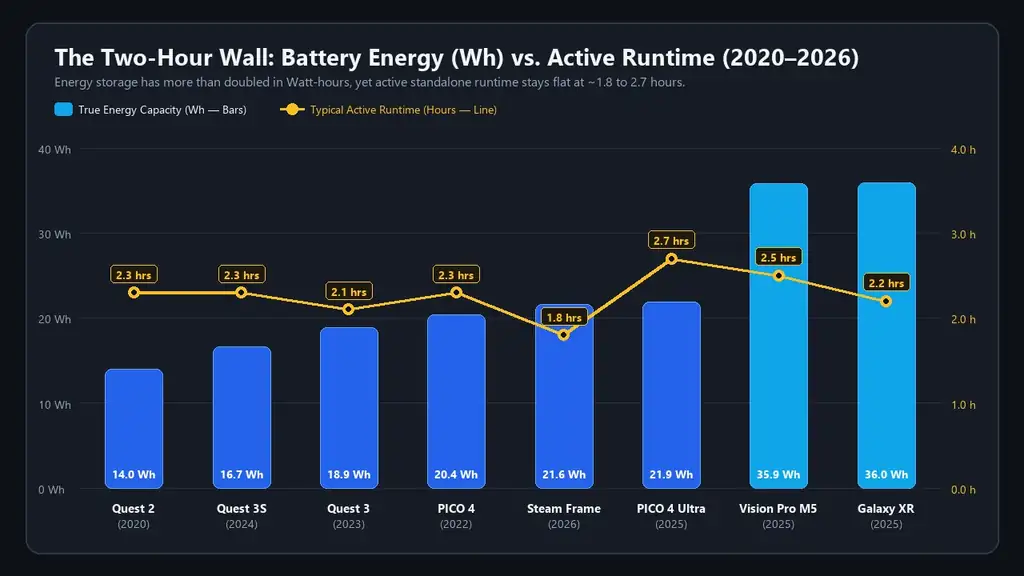
Why Runtime Stayed Flat: Reinvesting Every Saved Watt
Hardware engineers achieved dramatic per-watt efficiency gains—but consistently spent that energy budget on fidelity rather than unplugged endurance:
- The Pancake Lens Light Penalty: Compact pancake optics fold light internally using polarization films that absorb 85% to 90% of emitted display brightness. Driving LCD backlights or micro-OLED emitters hard enough to deliver crisp HDR visuals consumes substantial power.
- Dual 4K Micro-OLEDs & Sensor Fusion: Headsets such as Samsung Galaxy XR and Apple Vision Pro (M5) drive over 23 million pixels alongside continuous eye tracking, hand tracking, LiDAR/depth mapping, and low-latency passthrough.
- Always-On Multimodal AI: Operating systems in 2026—from Android XR with Gemini live scene understanding to visionOS and Horizon OS—run persistent neural workloads in the background.
Manufacturers did not fail to improve battery efficiency by 2026—they spent every saved watt on pancake optics, 4K micro-OLEDs, and real-time spatial AI.
Four Key Power Breakthroughs Available in 2026
- External Pocket Packs Standardize High-End XR: Following Apple's lead, Samsung Galaxy XR (
36 Whexternal pack weighing 302g) and Vivo Vision (~398g visor) move heavy cells into your pocket. Meanwhile, Apple's silicon jump to the Apple Vision Pro (M5) squeezed 30 extra minutes out of the exact same35.9 Whpack—reaching 2.5 hours of general spatial use and 3 hours of video—while making battery replacement effortless. - Rear Counterweights & 45W Fast Charging: Building on the PICO 4, the PICO 4 Ultra houses a
5,700 mAh(~21.9 Wh) battery in the rear strap pad for natural 50:50 balance and supports 45W USB-C PD 3.0 fast charging for rapid top-ups between matches. - Streaming-First Asymmetry on PC VR: The Valve Steam Frame (
21.6 Wh) demonstrates how compute offloading saves battery: running demanding PC games natively on-device via Proton lasts roughly 55–60 minutes, whereas streaming over its 6 GHz wireless dongle with eye-tracked foveated encoding nearly doubles play sessions to 80–120 minutes, paired with 40-hour AA controller battery life. - Magnetic Hot-Swap Ecosystems & Early Silicon-Carbon Cells: Third-party halo straps—led by the BOBOVR S3 Pro Super Strap with its high-voltage
10,000 mAh(~38.5 Wh) B100 magnetic packs—deliver sustained 20W–30W output and active forehead cooling, letting players click fresh batteries onto the back of their head mid-game. Concurrently, 2026 headsets like Vivo Vision introduced smartphone-derived silicon-carbon (Si-C) anode cells to boost energy per gram.
3. Manufacturer Roadmap (2027–2030): Targeting All-Day Spatial Glasses
Over the next four years, hardware roadmaps aim to shrink 550g goggles into 100g–220g eyewear capable of 4 to 6+ hours of untethered mixed use. Because human neck comfort caps head-mounted weight, manufacturers are combining five hardware and regulatory shifts:
- Total Compute + Battery Decoupling (Spring 2027+): Meta VR Glasses (developed under codenames Project Puffin and Phoenix) moves both the Snapdragon XR2 Gen 3 processor and high-density battery off the face into a ~300g pocket compute puck. The magnesium-frame glasses weigh roughly 100 grams, run cool without facial fans, target 3+ hours of mixed use, and support 45W continuous desk passthrough.
- High-Silicon Anodes & Solid-State Chemistry: Replacing conventional graphite anodes with silicon-carbon composites boosts volumetric energy density by 20% to 40% in 2027–2028 pucks, while semi-solid and all-solid-state electrolytes on the 2028–2030 horizon eliminate liquid-electrolyte swelling risks near the head and unlock sub-15-minute fast charging.
- Universal Eye-Tracked Dynamic Foveated Rendering (DFR): Standardizing infrared eye tracking across mid-range headsets lets GPUs shade full 4K detail strictly within the 2–5° central fovea where your pupils look, cutting GPU pixel workloads by 30% to 50%.
- Tandem Micro-OLEDs & Micro-Lens Arrays (MLAs): Dual-stack OLED-on-Silicon paired with collimating micro-lenses and lower-loss optics dramatically reduces the power wasted inside pancake lenses.
- The EU Right-to-Repair Mandate (February 2027): Under Article 11 of EU Regulation 2023/1542 taking effect in February 2027, portable batteries in consumer electronics must be user-replaceable with standard tools—pressuring all global VR brands away from glued-in disposable visors toward modular straps and external packs.
4. Step-by-Step Guide: How to Maximize VR Battery Life Today
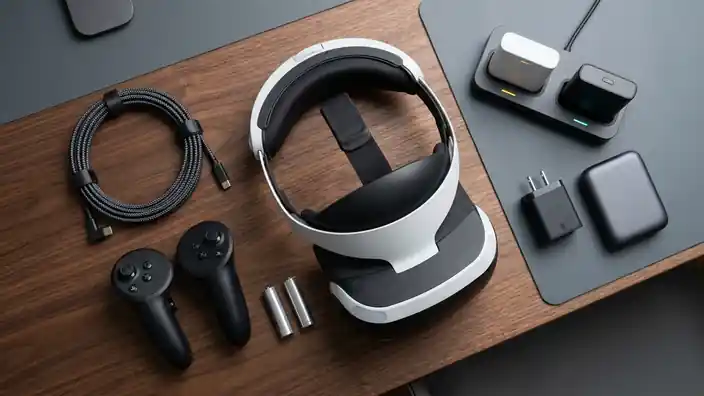
Whether you play on Meta Quest 3, Meta Quest 3S, Valve Steam Frame, Samsung Galaxy XR, or Apple Vision Pro (M5), follow this proven checklist to eliminate mid-game shutdowns and protect long-term cell health.
Part A: Hardware Setup for "Infinite" Wireless Play
- Use Proper USB-C PD Wattage (27W–45W+): Never use old USB-A cables or 10W–12W phone bricks; your headset draws 15W–22W under load and will still drain while plugged in. Choose a USB-C Power Delivery 3.0 power bank or GaN charger rated for 27W to 45W (supporting
9V/3Aor15V/3A) for standalone gaming visors, or 45W–65W for Vision Pro and Galaxy XR. - Pick Your Ergonomic Power Rig: For active room-scale gaming, pair a BOBOVR S3 Pro Super Strap (or Meta Quest Elite Strap with Battery) with two magnetic packs on a dual dock for 3-second mid-game swaps. For zero extra neck weight during sim racing or movies, slip a
20,000 mAh(~74 Wh, 45W PD) power bank into your pocket for 6 to 8+ continuous hours. - Strain-Relieve Your USB-C Port: Always connect a 90-degree right-angle USB-C cable to the headset and fasten it to the side strap with two Velcro clips. Tugging on an unclipped straight plug is the #1 cause of loose or melted VR charging ports.
- Plug In at 60%–80%, Not 10%: On headsets without bypass charging, plugging an external battery into a 10% visor forces peak charging heat on top of heavy GPU heat. Connecting your external pack at the start of your session keeps temperatures cool and steady.
- Upgrade Controller AA Cells: For Quest 3/3S and Steam Frame controllers, use 1.5V constant-voltage rechargeable Lithium AA batteries instead of 1.2V NiMH cells so haptics and tracking stay strong right down to empty.
Part B: Five Quick Software Tweaks (+30 to +45 Minutes Unplugged)
- Step down refresh rate to 90Hz or 72Hz: Dropping from
120Hzto90Hzcuts GPU frame overhead and saves 15%–20% battery outside fast rhythm shooters (see our Meta Quest battery longevity guide for menu paths). - Turn off color passthrough when not needed: Switching from live mixed reality to a dark virtual home environment disables continuous high-power camera and depth-sensor processing during seated media viewing.
- Lower screen brightness to 65%–75%: Once your facial interface blocks room light, your eyes adapt within seconds, cutting backlight power draw and forehead warmth.
- Keep Dynamic Foveated Rendering on Auto/High: Avoid forcing manual 150%+ supersampling profiles when away from external power.
- Stop phantom standby drain & store at 50%: Disable auto-wake proximity sensors if lens covers wake your visor inside a bag, perform a full Power Off after play, avoid leaving headsets trickle-charging at 100% 24/7 on a Meta Quest Compact Charging Dock, and store unused batteries at 45%–60% charge (also see our Apple Vision Pro Battery charging and care guide).
प्रश्न और उत्तर
Why do VR headsets in 2026 still only last around 2 to 2.5 hours on battery?
Because manufacturers reinvested every chip and display efficiency gain into power-hungry features—specifically pancake lenses (which absorb 85–90% of display light), dual 4K micro-OLED screens, continuous color passthrough cameras, and always-on spatial AI—keeping active standalone runtime between 2 and 2.7 hours.
Why does a 3,166 mAh Apple Vision Pro battery hold more energy than a 4,879 mAh Meta Quest 3 battery?
Milliampere-hours (mAh) do not account for voltage. Apple's Vision Pro battery runs at a much higher voltage (~11V–13V) than single-cell 3.87V visor batteries, meaning its 3,166 mAh rating actually stores 35.9 Watt-hours (Wh) of energy—nearly double the 18.88 Wh inside a 4,879 mAh Meta Quest 3.
What wattage power bank do I need to charge a VR headset while playing?
Use a USB-C Power Delivery (PD 3.0) power bank or wall charger rated for at least 27W to 45W (with a 9V/3A or 15V/3A profile) for standalone gaming headsets like Meta Quest 3/3S, PICO 4 Ultra, and Valve Steam Frame, or 45W–65W for Apple Vision Pro and Samsung Galaxy XR.
How can I get unlimited wireless battery life on Meta Quest 3, Quest 3S, or Steam Frame?
Two setups work best: a magnetic hot-swappable halo strap (such as the BOBOVR S3 Pro with two 38.5 Wh B100 magnetic battery packs rotated on a dual charging dock), or a lightweight 20,000 mAh (45W USB-C PD) pocket power bank connected via a 90-degree Velcro-clipped USB-C cable.
How will VR headset manufacturers improve battery life between 2027 and 2030?
Beginning with devices like Meta VR Glasses in 2027, manufacturers are moving both the processor and battery into a ~300g pocket compute puck to shrink eyewear below 100–200g, while adopting high-density silicon-carbon anodes (+20–40% capacity), solid-state cells, tandem micro-OLEDs, and eye-tracked dynamic foveated rendering.
How does the 2027 EU battery regulation affect future VR headsets?
Article 11 of EU Regulation (EU) 2023/1542 takes effect in February 2027, requiring portable batteries in consumer electronics to be readily removable and replaceable by users with standard tools. This pushes VR brands away from glued-in internal pouch cells toward modular battery straps and external tethered packs.