Into the Radius 2 review: deep, tense survival that still needs polish
An AI-written assessment of Into the Radius 2 from official game details and published reviews: tense, grounded survival, detailed modular guns, a full voiced campaign at 1.0 and co-op, but lingering bugs, a familiar formula, aliasing on Quest and no teleport option. Most outlet reviews cover the Early Access build.
Verdict
Into the Radius 2 offers one of VR's most detailed survival-shooter loops, and its 1.0 campaign answers the thin content critics saw in Early Access. Bugs, a familiar formula and smooth-locomotion-only movement mean it best suits patient fans of the genre.
Détail de la note
Points forts
- Tense, grounded survival gameplay
- Modular weapons with per-part wear
- Full voiced campaign and side missions at 1.0
- Two-player co-op
- Stable 72 fps on Quest 3
Points faibles
- Bugs reported through Early Access
- Familiar formula from the first game
- Aliasing and ASW artifacts on Quest
- No teleport locomotion
- No full 1.0 review from major outlets yet
This review is an AI-written assessment. It is based on official game details and on what published reviews broadly agree on, not on hands-on play.
What it is
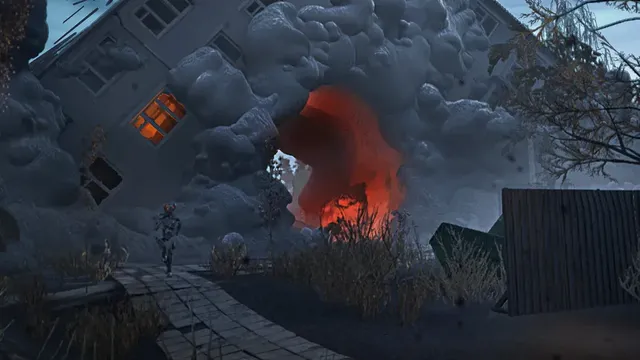
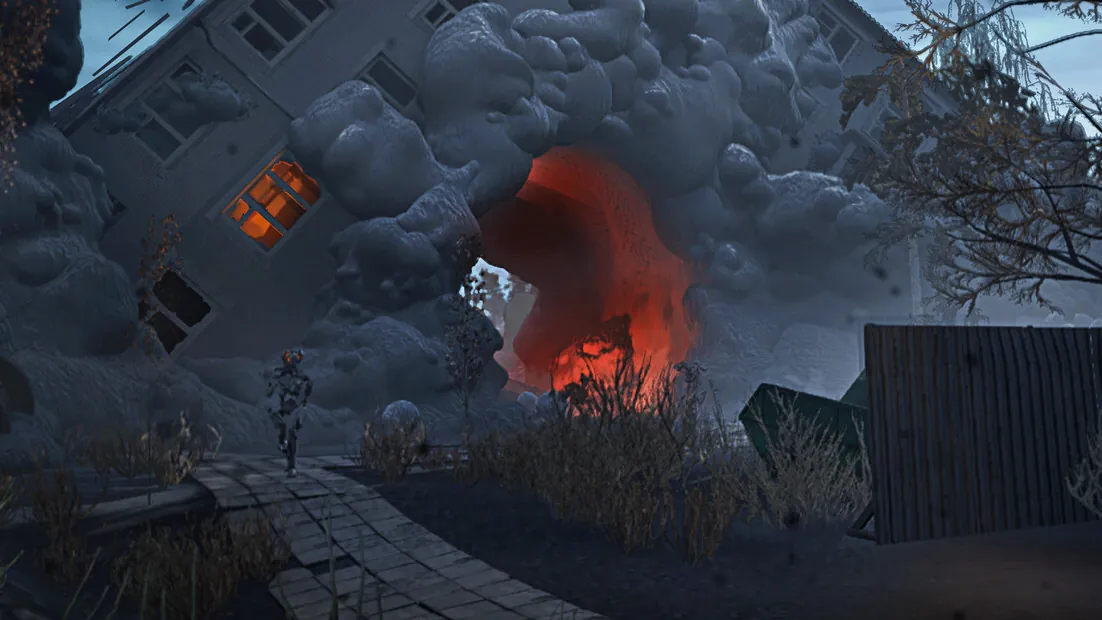
Into the Radius 2 is a hardcore survival shooter from CM Immersive, set in the Pechorsk Anomaly, a hostile zone of strange entities and environmental hazards. You plan each expedition from a shelter, manage ammo, gear and weapon wear by hand, complete missions and get out before things go wrong. A "Tide" system periodically resets enemies and loot. Weapons are modular, with swappable barrels, stocks, optics and grips, and every part tracks its own wear.
It launched in Early Access on SteamVR in July 2024 with two-player co-op, then came to Meta Quest 3 and Quest 3S in Early Access in May 2025. The 1.0 release reached Steam on April 23, 2026 and Quest on August 27, 2026, priced at $39.99. A PlayStation VR2 version followed on October 8, 2026 after a certification delay, with co-op there promised for Q4 2026. Version 1.0 added a fully voiced story campaign. Road to VR counts 10 main quests, 178 side missions, more than 50 firearms and 12 enemy types. An October 2026 patch reworked gun cleaning, let Mimic enemies ambush players and brought the platform versions into line.
One caveat matters: the in-depth outlet reviews we could find cover the Early Access build. We did not find a full 1.0 review from a major VR outlet, so this assessment combines those Early Access verdicts with what 1.0 officially adds.
Strengths
- Tense, grounded survival. UploadVR found that it "balances the horror and realism" well, with real tension in gunfights and reloads.
- Deep gun handling. Modular weapons, manual maintenance and loadouts built from chest rigs and armor give the hands-on detail the series is known for.
- Much more content at 1.0. The campaign, new zones, anomaly types and weapons answer UploadVR's main Early Access complaint that there was too little to do.
- Solid Quest performance. MIXED found the Quest 3 version held a stable 72 fps, although it runs at a lower resolution than PC.
- Co-op. Two-player co-op lets friends run expeditions together on PC and Quest, with PS VR2 co-op planned.
Weaknesses
- Bugs. UploadVR's Early Access review listed disappearing guns, grab problems, backpack faults and stutter, and felt it "released a bit too early". The October 2026 patch notes still fix vanishing scopes and helmets.
- Familiar formula. UploadVR felt it was largely "just more Into the Radius", with anomalies more tedious than threatening and survival systems lighter than in the first game.
- Quest image quality. MIXED saw noticeable aliasing and some Asynchronous Spacewarp artifacts on Quest 3.
- Comfort. UploadVR noted there is no teleport option, so smooth locomotion is required.
- Story tone. UploadVR reported that players found the 1.0 characters too cheery and talkative, and the developer cut back their appearances in response.
Who it suits
Into the Radius 2 suits patient players who enjoy slow, methodical survival games where preparation, inventory and weapon care matter as much as shooting. Fans of the first game will feel at home. Players who want fast action, quick sessions or teleport movement should look elsewhere, and anyone prone to motion sickness should be careful. PC VR offers the sharpest image, Quest 3 trades resolution for standalone play, and PS VR2 adds eye-tracked foveated rendering and adaptive-trigger feedback.
How it compares
Metro Awakening offers a more linear, story-led take on post-apocalyptic VR shooting with far less survival management. The Walking Dead: Saints & Sinners shares the scavenge-and-survive loop but leans on melee and a scripted world. Into the Radius 2 is the most systems-heavy of the three: it asks the most of the player and is the hardest to get into, but rewards players who enjoy its rules.
Early Access critics agreed the foundation was solid but buggy and thin. Version 1.0 fixes the content problem on paper. Whether it fixed the rough edges is not yet backed by a full review from a major outlet, so the scores below are provisional.
Sources
- PlayStation Blog: VR Shooter Into the Radius 2 Hits PS VR2 September 24
- UploadVR: Into The Radius 2 Exits Early Access Later This Month
- Road to VR: 'Into the Radius 2' Leaves Quest Early Access Aug 27, Including Campaign & New Content
- UploadVR: Into The Radius 2 Exits Early Access On Quest 3 Later This Month
- Road to VR: Survival Shooter 'Into the Radius 2' Comes to PSVR 2 Next Month
- UploadVR: Into The Radius 2 delayed on PlayStation VR2
- UploadVR: Into the Radius 2 Early Access Review, Barebones Survival
- MIXED: Into the Radius 2 has launched into Early Access on Quest 3, how does it run?
- MIXED: Into the Radius 2 makes gun cleaning more hands-on and lets Mimics wait in ambush
- Road to VR: 'Into the Radius 2' Releases in Early Access on PC VR Today, Including Two-Player Co-op