
Walker Industries Upgrades Its $650 Andromeda PC VR Headset to 2160x2160 Per Eye at No Extra Cost
On October 20, three days into its Kickstarter, Walker Industries raised the $650 Andromeda's panels from 1600x1600 to 2160x2160 per eye and its battery from 45Wh to 85Wh, including for existing backers.
Par vrBlogs
· 2 min de lecture · Source: Kickstarter (Walker Industries)
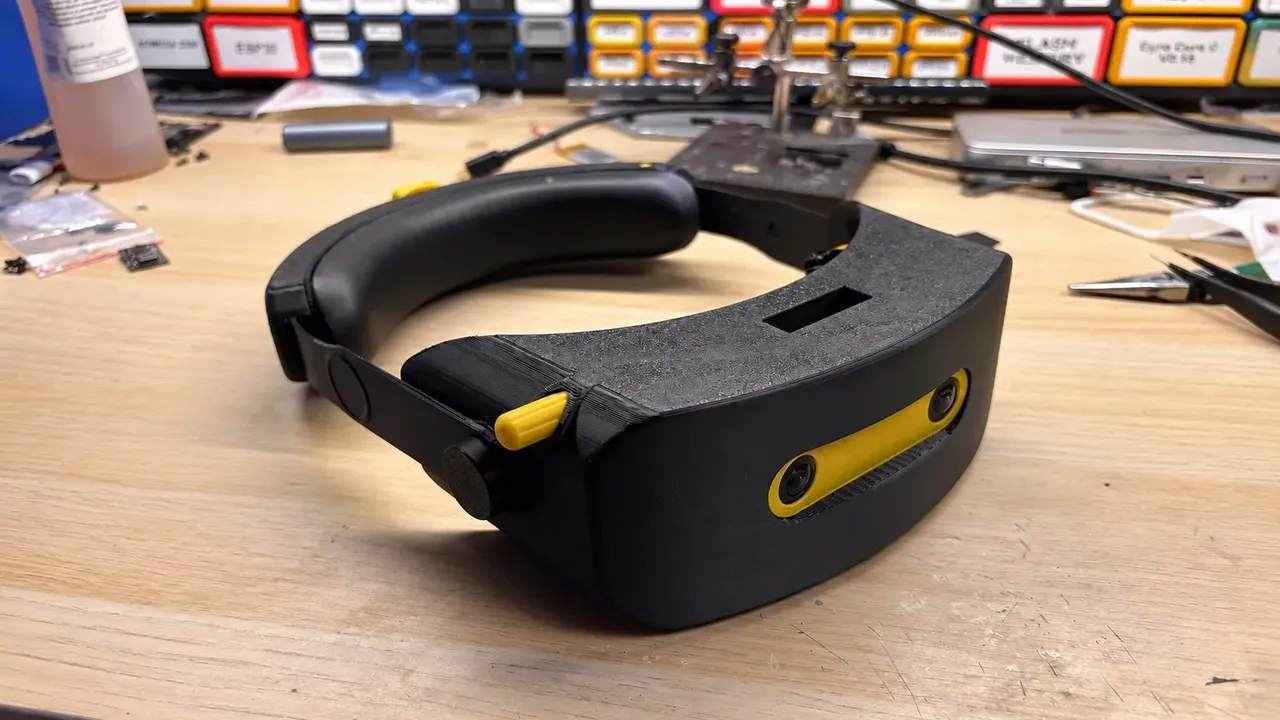
Walker Industries has upgraded the $650 LCD version of its Andromeda PC VR headset from 1600 x 1600 to 2160 x 2160 pixels per eye, and its battery from 45Wh to 85Wh, without raising the price. The company announced the change on October 20 in Kickstarter Update #4, three days after the campaign launched. The Ghost Howls covered the project on October 22, and its spec list still showed the original Andromeda figures.
What changed
- Displays: 2160 x 2160 LCD per eye at 90Hz, up from 1600 x 1600. That matches the company's flagship Vector Gear.
- Battery: an 85Wh Amprius silicon cell, up from 45Wh. The official site lists a target of more than six hours of use and marks it as still in progress.
- Existing backers: pledges made at the old spec are upgraded automatically. The reward tier is still labelled "1600x1600" because, the update says, "Kickstarter doesn't let us rename a reward" once it has backers.
- Why: the company credits "new supplier deals and changes to our bill of materials."
The $650 Andromeda is PC VR only, with wireless streaming, inside-out tracked controllers, eye and mouth tracking, automatic IPD adjustment and a 105-degree field of view, according to the update.
The rest of the lineup
The $980 Vector Gear works both standalone and as a PC VR headset. It runs on a Snapdragon 8cx Gen 3 with 8GB of RAM plus an RK3588S co-processor with its own 8GB for tracking and wireless streaming. It uses Fresnel-based "pseudo-pancake" optics and comes with a 500GB or 1TB SSD. A $1,250 Andromeda uses 2560 x 2560 pancake OLED panels, running at 75Hz natively or at 90Hz upscaled from 1920 x 1920. Cheaper dev kit tiers are for backers willing to assemble the headset themselves.
The team writes most of the software itself, including the Arch-based YuukOS, AstroSLAM tracking with a SteamVR driver, and Shinra Meisin face tracking that sends data over OSC to apps such as VRChat. It says hardware and software will be source-available or fully open source, released in stages after launch.
Funding and risk
The campaign is all-or-nothing, with a $150,000 goal and a December 16 deadline. On October 31 it showed $39,330 pledged by 49 backers, and an October 29 update marked passing a quarter of the goal. Every headset tier lists May 2027 delivery. The headset's weight hasn't been set yet, and Kickstarter itself notes that rewards aren't guaranteed. The Ghost Howls is enthusiastic about the project but names Lynx and Tilt Five as warnings about hardware crowdfunding. It also calls Valve's Steam Frame a problem for the Vector Gear, because it offers comparable features at a similar price from an established company.
Vous avez aimé cet article ?
Aimez-le pour en informer la rédaction ou enregistrez-le pour le lire plus tard.
Commentaires
Connectez-vous pour participer à la conversation.
Se connecterAucun commentaire pour le moment. Lancez la conversation.
·