
Alibaba launches N1 smartglasses with eye tracking and iris payments
Alibaba launches N1 smartglasses with eye tracking and iris payments in China, plus 50MP cameras, 4K video, health sensing and Alibaba service integration.
Von vrBlogs
· 4 Min. Lesezeit · Quelle: The Ghost Howls
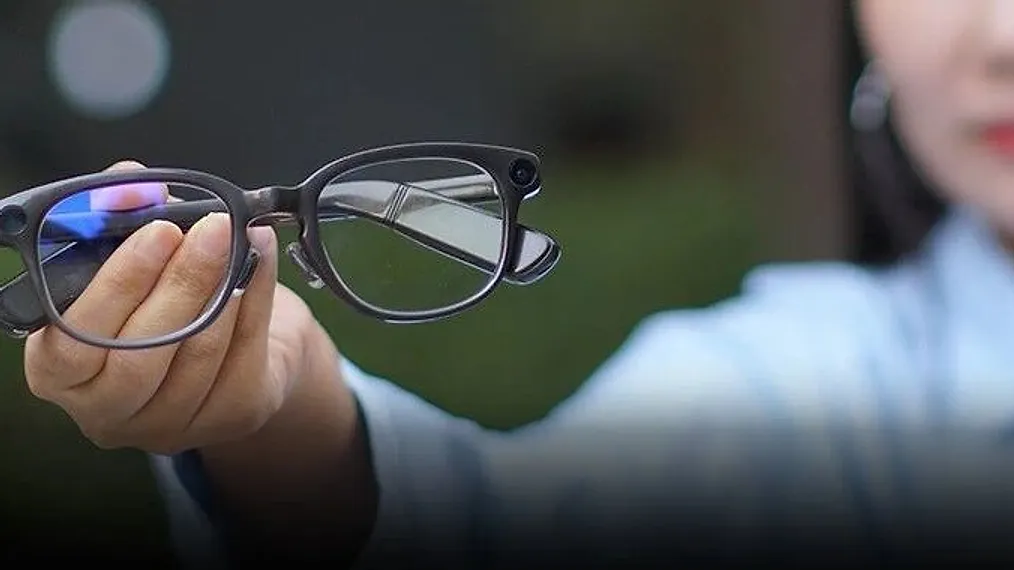
Alibaba launches N1 smartglasses with eye tracking and iris payments in China as a new series containing N1 and N1 Pro. The glasses combine camera-based AI assistance with Alibaba services, while Qwen N1 Pro adds high-precision eye tracking, iris authentication for Alipay payments and health monitoring.
The series was announced at an event in Hangzhou. An official event report says N1 and N1 Pro had already appeared at Yunqi Conference on September 22. Online reservations opened that day, with retail sales scheduled for October 13. The N series follows Qwen’s earlier S and G product lines.
Eye tracking targets what the wearer sees
Qwen N1 Pro uses high-precision eye tracking so its AI can identify where the wearer is looking, rather than interpreting an entire camera image or relying only on head position. The glasses use one 1.7mm camera for each eye. Alibaba claims recognition error below 1°.
The companion app asks users to complete eye-movement calibration after first putting on the glasses. In an official hands-on test, four different objects were placed on a table. The tester looked at each object and asked the same question about what was in front of them. The answers included a can of cola, a cup and glasses cleaner, matching the object receiving attention in most cases.
A second test used a ChinaJoy brochure held about 40 centimetres away. The brochure contained 11 circles with different company names and booth numbers, although the printing was not clear. The tester looked at separate circles and asked for each company name and booth number. Qwen N1 Pro reportedly gave accurate answers, including “RZR” and “点点数据” with their corresponding booth numbers.
The hands-on testing found occasional tracking mistakes, especially when nearby elements were close together. Most of the time, however, the glasses identified the intended target. The official report says this lets Qwen filter irrelevant visual information before answering a question.
Possible applications include productivity, industrial training and maintenance. During machine-safety training, for example, glasses could check whether a user is looking at required indicators. Broader applications would require Alibaba to let developers build software for the glasses; that capability was not available at the time of the report.
Iris authentication adds Alipay payment security
Qwen N1 Pro also adds iris authentication through Qwen’s cooperation with Ant. The official claim puts the iris-identification error rate below one in one million.
For iris payment, the user starts a transaction, looks at a merchant’s QR code, confirms the payment information and nods. After authentication succeeds, Alipay completes the payment. The system is intended to stop someone who steals the glasses from using them to make payments.
The N1 glasses integrate with Alibaba services that are widely used in China. Users can pay in shops by looking at QR codes with the glasses. They can also ask the AI assistant to buy products on Taobao. Taobao Flash Sale supports voice ordering or a single spoken order, with the full ordering and query process handled through the glasses, although using a phone may be faster.
Camera features and display-free operation
The N1 series has 50MP cameras, 1G5P lenses and Qwen’s Super-Sensing Image Engine. Official specifications list RAW-domain enhancement across scenes, 4K ultra-high-definition video, multiple stabilisation modes, AI composition and live photos.
The official hands-on report says the camera produced images suitable for sharing, including night scenes. AI composition addresses framing problems associated with display-free AI glasses. It can identify whether the subject is a person, landscape or another scene type, then optimise composition around that subject.
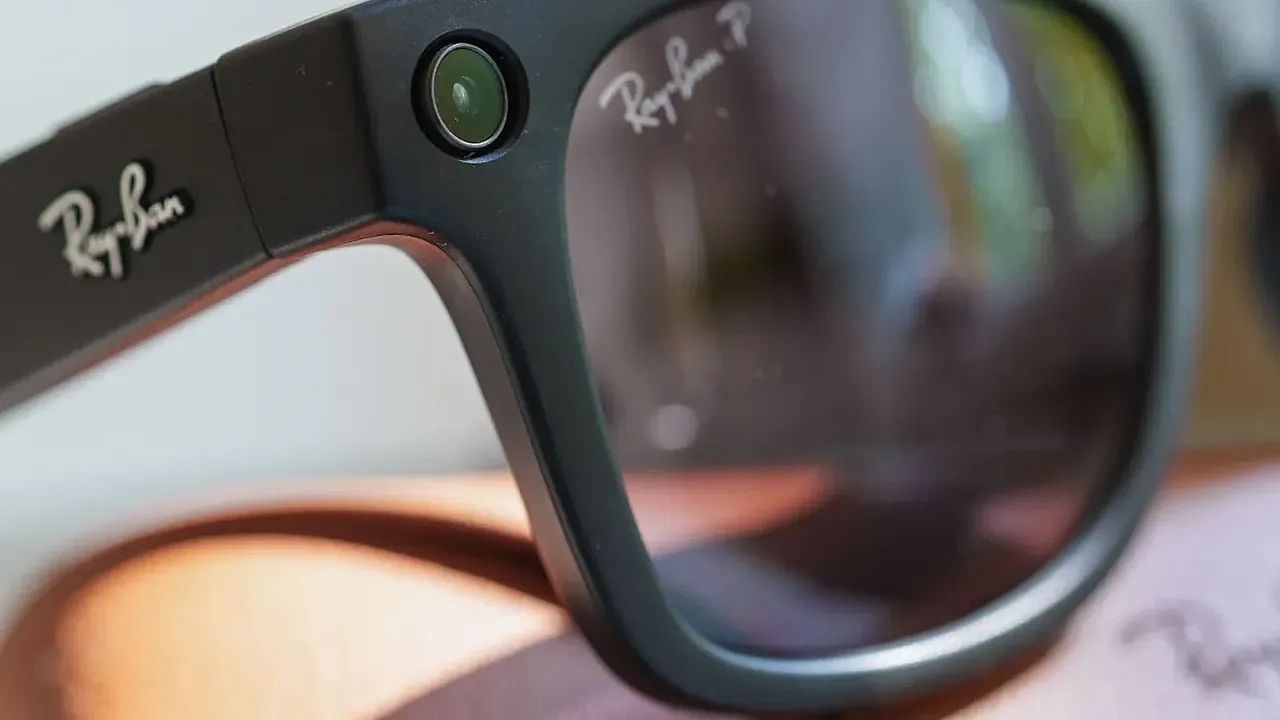
The new glasses have no display. Intended uses include phone calls, live translation, music listening and AI assistance. The Ghost Howls report compares N1 with Ray-Ban Meta, noting its 50MP camera against Ray-Ban Meta’s 12MP camera. It reports up to nine hours of continuous music streaming or 25 hours in standby, while Ray-Ban Meta offers six hours of music.
The Ghost Howls writer had not personally tested the new glasses. VR AR World reportedly tested them and found the pictures good even at night. The earlier Alibaba glasses tested by that writer had a monochrome display, a highly luminous screen and an easily detachable, swappable battery. The N1 glasses differ by removing the display.
Health sensing and proactive assistance
Qwen N1 Pro adds a sensor inside the nose bridge for health-data collection and monitoring. After several hours of use, the app can show activity, calories burned, neck and spine use, eye use and heart rate.
These measurements can inform later AI responses. If monitoring finds that a user spends 40% of their time looking down, an answer about arranging a workstation could recommend changes that reduce prolonged downward posture.
The N series also uses an industry-first low-power sensing chip and a self-developed on-device visual-understanding model. Its “全天候环境感知” feature supports continuous environmental awareness. At a station, the glasses can proactively point out a ticket gate or departure time instead of waiting for the user to activate them.
Another feature, “AI灵感画集”, captures notable moments from daily life and turns them into images in an AI style selected by the user.
Qwen expands its AI hardware line
The Hangzhou event also introduced Qwen AI earbuds alongside the N1 glasses series. The launch therefore covered more than one AI hardware product, with N1 and N1 Pro as its smartglasses models.
Alibaba’s N1 smartglasses focus on China-based services, camera AI and hands-free interaction. Qwen N1 Pro adds more precise visual targeting, iris-based Alipay authentication and health sensing. Reported testing describes strong but imperfect eye tracking and good night photography, while official claims cover below-1° eye-tracking error, below-one-in-one-million iris-identification error, 50MP cameras and 4K recording.
Hat dir diese Story gefallen?
Gefällt sie dir? Zeige es der Redaktion oder speichere sie zum späteren Lesen.


Kommentare
Melde dich an, um an der Unterhaltung teilzunehmen.
AnmeldenNoch keine Kommentare. Starte die Unterhaltung.
·